
 DE
DE  EN
EN  FR
FR  TH
TH 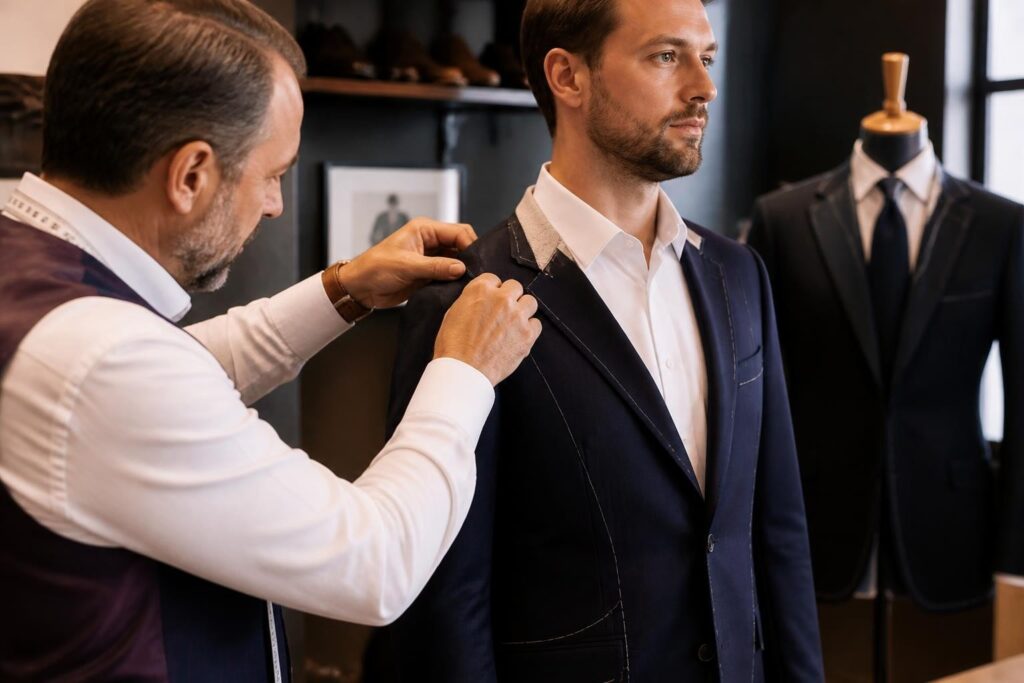
When choosing custom menswear, understanding the role of the suit bespoke tailor becomes essential for achieving the perfect fit and timeless style. A bespoke tailor doesn't simply alter existing garments or work from pre-made patterns. Instead, they create an entirely unique piece crafted specifically for your body, preferences, and lifestyle. This personalized approach to garment construction has sustained its relevance for centuries, adapting to modern fashion while maintaining traditional craftsmanship standards. Whether you're preparing for a significant business event, a wedding, or building a professional wardrobe, working with the suit bespoke tailor ensures investment in quality that lasts decades rather than seasons.
Understanding Bespoke Tailoring Excellence
The term "bespoke" originates from the phrase "to be spoken for," signifying fabric spoken for by a specific client. This linguistic heritage reflects the fundamental principle behind bespoke tailoring: exclusivity and personalization at every stage. The history of bespoke tailoring traces back to the 17th century, when individual craftsmen began serving aristocracy with custom-fitted garments that demonstrated both status and refined taste.
Unlike made-to-measure or ready-to-wear options, the suit bespoke tailor creates patterns from scratch. This distinction matters significantly when considering garment quality and fit precision.
Key Differences in Tailoring Approaches
| Tailoring Type | Pattern Method | Fittings | Customization Level | Timeline |
|---|---|---|---|---|
| Ready-to-wear | Standardgrößen | None | Minimal | Immediate |
| Made-to-measure | Adjusted template | 1-2 sessions | Mäßig | 3-6 weeks |
| Bespoke | Individual pattern | 3+ sessions | Complete | 8-12 weeks |
The suit bespoke tailor invests substantial time understanding your posture, movement patterns, and body asymmetries. Most individuals have one shoulder slightly higher than the other, or one arm marginally longer. These natural variations become invisible when a skilled tailor accounts for them during pattern creation.
The Comprehensive Bespoke Process
Working with the suit bespoke tailor involves multiple stages, each critical to achieving exceptional results. The bespoke tailoring process follows a methodical approach refined over centuries of practice.
Initial Consultation and Design
Your first meeting establishes the foundation for your custom garment. During this session, the suit bespoke tailor discusses:
- Intended use: Business wear, formal occasions, casual elegance, or special events
- Fabric preferences: Weight, texture, pattern, and seasonal considerations
- Style details: Lapel width, button configuration, pocket styles, and lining choices
- Color coordination: Matching your existing wardrobe and personal coloring
- Budget parameters: Establishing realistic expectations for fabric and construction options
This consultation typically lasts 45-90 minutes. Experienced tailors like those at Alex’s Fashion guide clients through countless fabric swatches and style books, helping visualize the final garment while respecting traditional proportions and contemporary trends.
Precise Measurement Taking
The suit bespoke tailor takes between 20-35 measurements depending on garment complexity. Standard measurements include chest, waist, hips, shoulder width, and sleeve length. However, bespoke tailoring extends beyond these basics to capture:
- Shoulder slope angle for natural jacket drape
- Back width for comfortable arm movement
- Neck circumference for collar comfort
- Seat measurement for trouser fit
- Rise calculation for proper pant positioning
- Sleeve pitch for natural arm hang
Professional tailors record these measurements along with notes about posture, dominant hand, and wearing preferences. Some clients prefer slightly roomier armholes for active movement, while others prioritize sleek silhouettes for formal settings.
Pattern Creation and First Fitting
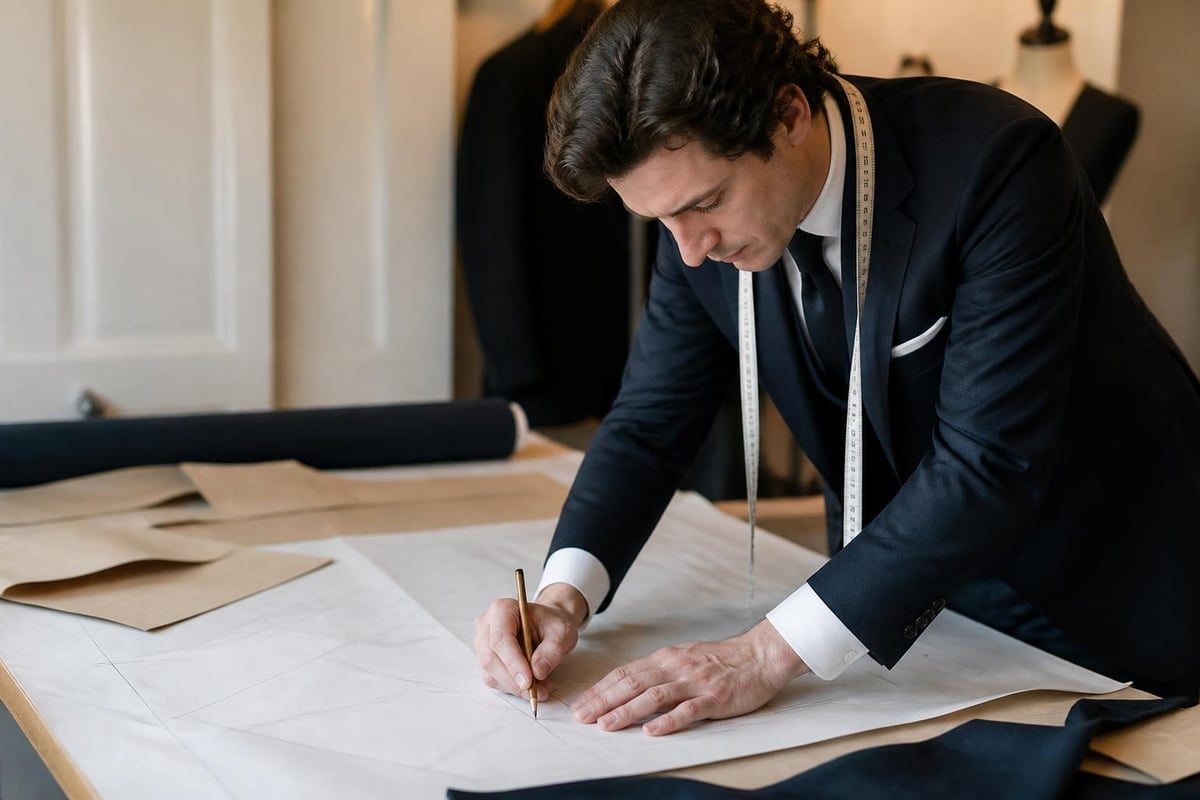
After measurements, the suit bespoke tailor creates a unique paper pattern. This pattern becomes the blueprint for cutting fabric, ensuring each piece aligns with your specific proportions. Understanding the bespoke process reveals how this stage separates true bespoke from altered templates.
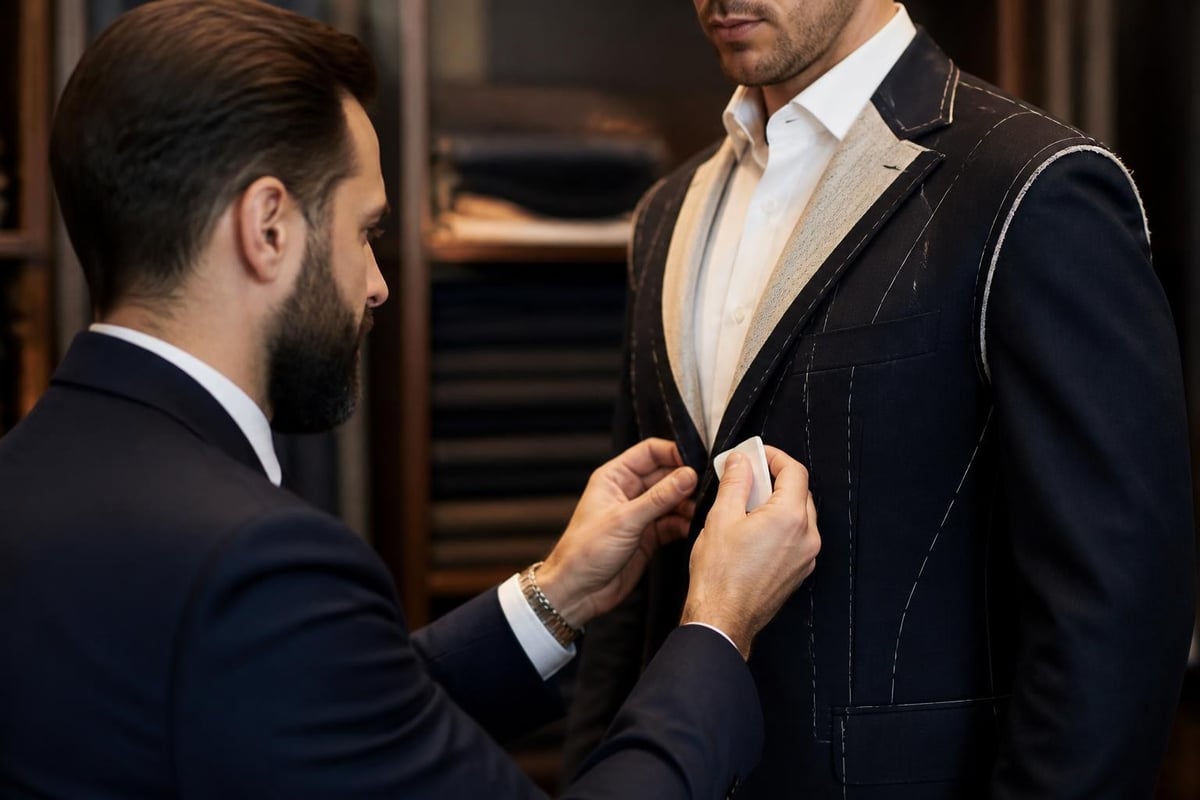
The first fitting occurs with a basted garment-pieces temporarily stitched together allowing adjustments. During this session, you'll see your suit taking shape while the tailor marks necessary modifications.
Common first-fitting adjustments include:
- Shoulder seam repositioning
- Sleeve length refinement
- Waist suppression adjustment
- Chest ease modification
- Collar roll correction
Fabric Selection and Quality Considerations
The suit bespoke tailor sources fabrics from renowned mills worldwide, offering quality levels impossible to find in mass-produced garments. Premium wool from mills like Loro Piana, Ermenegillio Zegna, and Scabal provides superior drape, durability, and comfort.
Fabric Weight and Climate Appropriateness
Choosing appropriate fabric weight proves essential, particularly in tropical locations like Krabi, Thailand. The suit bespoke tailor recommends specific weights based on climate and intended use:
| Weight Category | Grams per Meter | Am besten für | Seasonal Use |
|---|---|---|---|
| Super lightweight | 200-240g | Tropical climates | Year-round warm weather |
| Lightweight | 240-280g | Spring/summer | Moderate temperatures |
| Medium weight | 280-320g | Three-season wear | Spring through fall |
| Heavy weight | 320-400g | Winter suits | Cold climates |
In Southeast Asian climates, lightweight fabrics with breathable weaves maintain comfort while preserving structure. The suit bespoke tailor at establishments like Alex's Fashion understands local climate demands, recommending fabrics that resist humidity while maintaining crisp appearance.
Understanding Super Numbers
Fabric quality often references "Super" numbers (Super 100s, Super 150s, etc.), indicating wool fiber fineness. Higher numbers mean finer fibers, creating softer, more luxurious fabric. However, finer doesn't always mean better for every application.
Super number practical guide:
- Super 100s-120s: Durable, ideal for frequent wear, business travel
- Super 130s-150s: Balanced luxury and practicality, excellent for most suits
- Super 160s-180s: Very fine, requires careful handling, special occasions
- Super 200s+: Extremely delicate, reserved for formal events
The suit bespoke tailor helps balance aesthetic preferences with practical durability requirements based on your lifestyle.
Craftsmanship Techniques That Define Quality
How bespoke suits are made involves hand-sewing techniques that machines cannot replicate. The suit bespoke tailor employs methods preserved through apprenticeship traditions spanning generations.
Hand-Stitched Construction Elements
Modern bespoke tailoring incorporates strategic hand-sewing where it provides functional and aesthetic advantages:
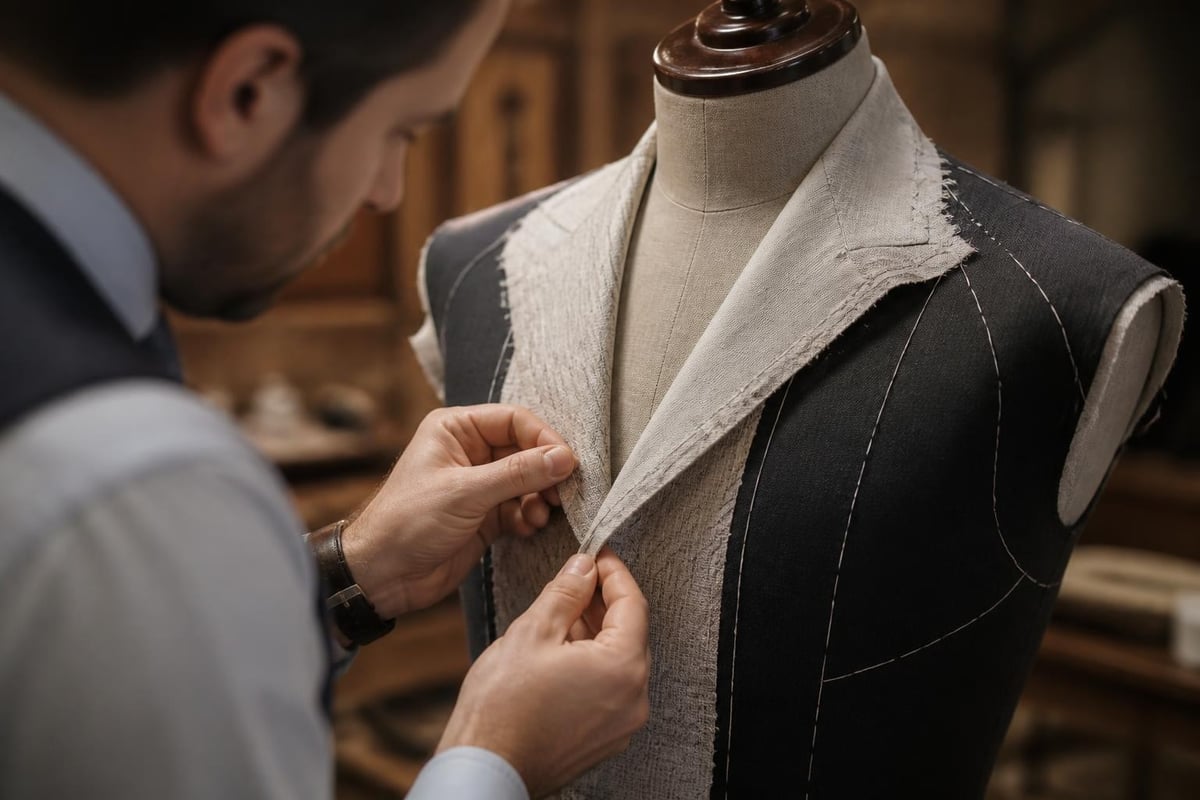
- Floating canvas: Hand-stitched chest piece allows natural drape while maintaining structure
- Lapel construction: Hand-padded lapels create dimensional roll impossible with fused alternatives
- Buttonholes: Hand-sewn buttonholes demonstrate craftsmanship while providing durability
- Sleeve attachment: Hand-set sleeves enable precise pitch adjustment for natural arm movement
- Interior finishing: Hand-stitched linings allow give without restriction
These techniques require years to master. The suit bespoke tailor's expertise shows in nearly invisible stitching that creates three-dimensional garment shapes conforming to body contours.
Multiple Fitting Sessions
Bespoke tailoring typically requires three to five fittings. Each session reveals progress while allowing refinement:
Second fitting addresses major structural adjustments from the first session. Seams are completed, allowing assessment of how fabric behaves when worn and moved in.
Third fitting focuses on minor refinements-sleeve length fine-tuning, trouser break adjustment, and final button placement. The garment approaches completion but remains adjustable.
Final fitting confirms perfection before finishing touches. Pressing, final button attachment, and quality inspection occur after this approval.
The suit bespoke tailor schedules these sessions with adequate time between, allowing fabric to settle and adjustments to be properly executed without rushing craftsmanship.
Investment Value and Long-Term Benefits
Choosing the suit bespoke tailor represents significant initial investment compared to ready-to-wear alternatives. However, analyzing cost-per-wear over garment lifespan reveals compelling value propositions.
Durability and Longevity Factors
A properly constructed bespoke suit lasts 15-25 years with appropriate care. This longevity stems from:
- Superior fabric quality resistant to wear and pilling
- Reinforced stress points at buttons, pockets, and seams
- Full canvas construction maintaining shape through repeated wear
- Hand-stitched elements allowing repairs without structural compromise
- Timeless styling transcending temporary fashion trends
The suit bespoke tailor creates garments designed for decades of service rather than single seasons. When comparing a bespoke suit costing $2,000 worn 200 times over 15 years versus five ready-to-wear suits at $400 each lasting three years with 60 wears, the cost-per-wear calculation favors bespoke investment.
Perfect Fit Impact on Professional Image
The history of the suit demonstrates how properly fitted garments communicate competence, attention to detail, and respect for occasions. The suit bespoke tailor understands that fit affects both appearance and confidence.
Professional advantages of bespoke fitting:
- Shoulders that align naturally without divots or pulling
- Sleeves revealing appropriate shirt cuff without excess fabric
- Trouser break falling at ideal shoe contact point
- Jacket length proportionate to body height and leg length
- Collar sitting flush against shirt without gapping
These details seem subtle individually but collectively create powerful impressions during business meetings, presentations, and professional networking.
Selecting Your Bespoke Tailor
Not all tailors offering "bespoke" services deliver authentic bespoke construction. Understanding what distinguishes genuine the suit bespoke tailor from alternatives protects your investment.
Essential Questions to Ask
When evaluating potential tailors, inquire about specific construction methods and processes:
How many fittings do you include? Authentic bespoke requires minimum three fittings. Fewer sessions suggest modified made-to-measure approaches.
Do you create individual patterns? The suit bespoke tailor must draft unique patterns rather than modifying standard templates.
What hand-sewing techniques do you employ? Specific answers about floating canvas, hand-padded lapels, and hand-set sleeves indicate genuine bespoke construction.
May I see examples of your work? Examining completed garments reveals construction quality, finishing standards, and attention to detail.
What is your experience and training background? Traditional apprenticeship or formal tailoring education demonstrates commitment to craft mastery.
Evaluating Craftsmanship Indicators
Physical inspection of a tailor's work reveals quality markers:
| Quality Indicator | Was zu beachten ist | Significance |
|---|---|---|
| Interior finishing | Clean seams, bound edges, quality lining | Attention to unseen details |
| Buttonholes | Hand-stitched, uniform, secure | Traditional craftsmanship |
| Pattern matching | Stripes/checks align at seams | Precision cutting and construction |
| Collar construction | Smooth roll, no bubbling | Proper interfacing and technique |
| Sleeve pitch | Natural forward angle | Understanding of body mechanics |
Reputation matters significantly when selecting the suit bespoke tailor. Alex’s Fashion exemplifies how decades of experience translate into refined skills and satisfied clients who return for entire wardrobes.
Maintaining Your Bespoke Investment
After investing in quality tailoring, proper maintenance preserves your garment's appearance and extends its lifespan. The suit bespoke tailor provides care instructions specific to chosen fabrics and construction methods.
Daily Care Practices
Simple habits protect bespoke garments between wearing:
- Use proper hangers: Wooden hangers with shaped shoulders maintain jacket structure
- Allow rest between wears: Wool fibers need 24-48 hours to release moisture and wrinkles
- Brush after wearing: Horsehair brushes remove surface dust and refresh fabric
- Empty pockets: Remove items preventing fabric distortion and pocket sagging
- Spot clean promptly: Address stains immediately with appropriate methods for fabric type
These practices seem basic but dramatically affect garment longevity when consistently applied.
Professional Cleaning and Storage
The suit bespoke tailor recommends dry cleaning sparingly-maximum twice per year for regularly worn suits. Excessive cleaning deteriorates fabric and affects hand-stitched canvas construction. When cleaning becomes necessary, choose reputable establishments experienced with fine garments.
Seasonal storage requires:
- Professional cleaning before storage
- Breathable garment bags (never plastic)
- Cedar blocks or lavender sachets for moth prevention
- Climate-controlled environment avoiding extreme temperature or humidity
- Hanging storage rather than folding to prevent creasing
Adapting Bespoke Traditions for Modern Lifestyles
While respecting traditional techniques, the suit bespoke tailor adapts to contemporary needs and preferences. Modern bespoke balances heritage craftsmanship with current functionality requirements.
Contemporary Style Modifications
Today's professionals require versatility that Victorian gentlemen never considered. The suit bespoke tailor incorporates modern adaptations:
- Functional pocket configurations for smartphones and modern technology
- Stretch fabric blends maintaining natural fiber appearance with added comfort
- Lighter construction for travel-friendly garments
- Casual styling options including unstructured jackets and sport coat alternatives
- Performance features like moisture-wicking linings for active wear
These innovations respect bespoke principles while acknowledging how professionals live and work in 2026.
Technology Integration in Traditional Processes
Progressive tailors blend technology with hand-craftsmanship. Digital measurement systems supplement traditional tape measures, creating precise records for future garments. Computer-aided design allows visualizing style options before pattern creation begins.
However, the suit bespoke tailor understands technology serves as tool rather than replacement for human expertise, judgment, and hand skills that define true bespoke quality.
Choosing the suit bespoke tailor represents investment in quality craftsmanship, perfect fit, and timeless style that mass-produced alternatives cannot match. The personalized attention, superior materials, and traditional techniques create garments serving you for decades while projecting confidence and professionalism. Whether you're building your first custom wardrobe or adding to an established collection, Alex’s Fashion brings over three decades of bespoke tailoring expertise to clients in Ao Nang, Krabi, creating custom suits, shirts, and complete wardrobes for men, women, and children with world-class fabrics and meticulous attention to detail.