
 DE
DE  EN
EN  FR
FR  TH
TH 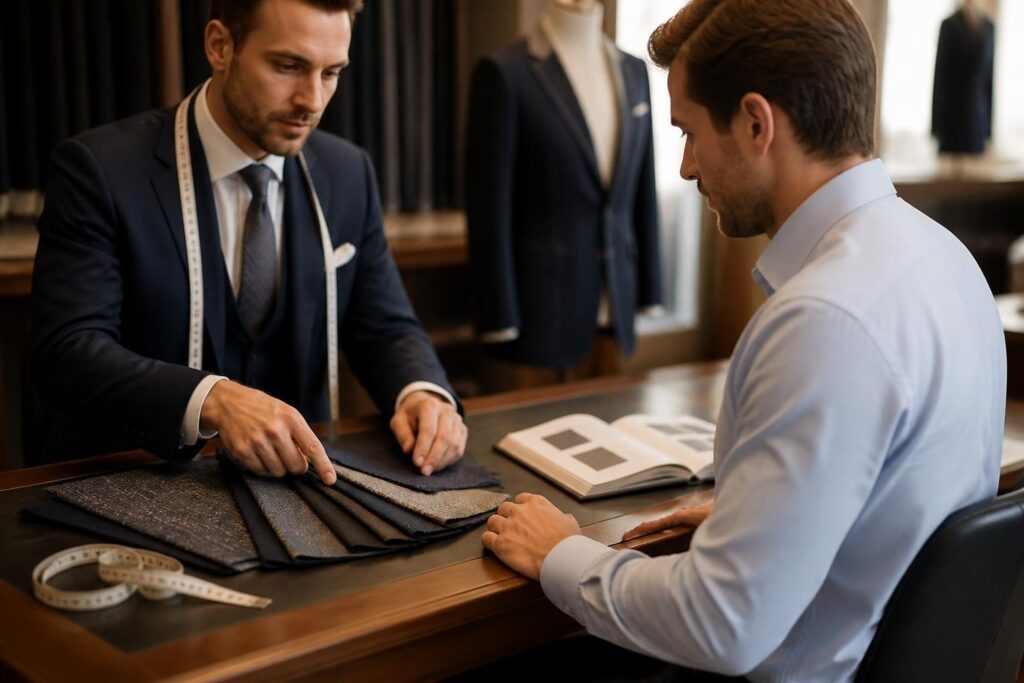
Walking into a bespoke tailors shop is unlike any other retail experience. Instead of browsing racks of ready-made clothing, clients enter a world where every garment is crafted specifically for their body, preferences, and lifestyle. This personalized approach to clothing has seen remarkable growth, with the bespoke tailor suit market expanding significantly as consumers increasingly value quality and individuality over mass production. In destinations like Ao Nang, Thailand, bespoke tailoring combines traditional craftsmanship with modern convenience, offering travelers and locals alike the opportunity to create wardrobe pieces that reflect their personal style.
The Distinctive Character of a Bespoke Tailors Shop
A bespoke tailors shop operates on fundamentally different principles than conventional clothing stores. The environment prioritizes consultation, measurement, and customization over quick transactions. When clients enter, they're greeted not by salespeople but by skilled tailors and consultants who understand garment construction, fabric properties, and how clothing should fit the human form.
The physical space typically features several key areas:
- Consultation zones where clients discuss their requirements and preferences
- Fabric libraries displaying hundreds of material options from various mills
- Fitting rooms equipped with proper lighting and mirrors for accurate assessments
- Work areas where cutting, sewing, and finishing take place
This layout supports a process-driven experience rather than impulse purchasing. Each section serves a specific purpose in the journey from initial consultation to final delivery.
The Measurement Process
Precision distinguishes bespoke tailoring from other clothing options. A professional bespoke tailors shop takes between 15 and 30 measurements for a single garment, depending on the item's complexity. These measurements extend beyond basic chest and waist dimensions to include shoulder slope, arm positioning, and posture characteristics.
| Measurement Category | Key Points Captured | Purpose |
|---|---|---|
| Shoulder & Chest | Shoulder width, slope angle, chest expansion | Ensures proper fit across upper body |
| Arms & Sleeves | Arm length, bicep circumference, wrist size | Creates comfortable sleeve movement |
| Torso & Waist | Natural waist, hip measurement, back length | Establishes garment silhouette |
| Legs & Inseam | Inseam length, thigh width, calf shape | Perfects trouser fit and drape |
Experienced tailors also observe how clients stand, move, and carry themselves. One shoulder sitting higher than the other, a forward lean, or an athletic build all influence pattern adjustments. This attention to individual characteristics ensures the finished garment looks natural and feels comfortable.
Fabric Selection and Quality Standards
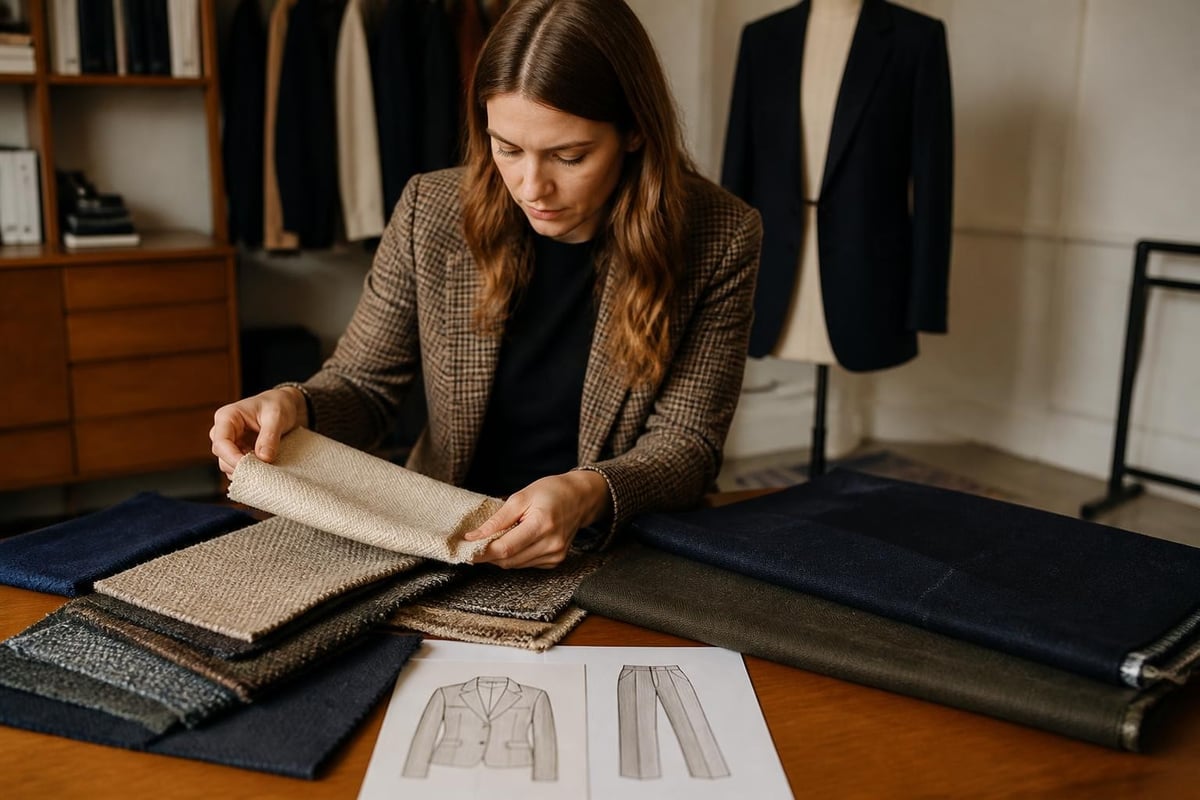
The fabric library represents one of the most valuable assets in a bespoke tailors shop. Quality establishments maintain relationships with renowned mills and stock hundreds of fabric options across various categories. Clients can choose from lightweight summer wools, substantial winter fabrics, luxurious silks, and durable cottons.
Understanding Fabric Categories
Different occasions and climates require specific fabric characteristics. A business suit worn in tropical Thailand demands different materials than one designed for European winters. Professional tailors guide clients through these choices based on:
- Climate considerations and where the garment will be worn
- Occasion formality ranging from business to evening events
- Personal comfort preferences including texture and weight tolerance
- Durability requirements based on wearing frequency
- Care and maintenance capabilities of the client
Super numbers indicate wool fiber fineness, with higher numbers representing finer, softer fabrics. A Super 100s wool offers excellent quality for regular wear, while Super 150s and above provide exceptional softness and drape at the cost of reduced durability. The choice between these options depends on how frequently the garment will be worn and the wearer's lifestyle.
Contemporary bespoke tailors shops increasingly emphasize sustainable and ethically sourced materials. Statistics show growing consumer preference for sustainable, well-fitted clothing, reflecting broader shifts in fashion consumption patterns.
The Construction Process
What happens between measurement and final fitting distinguishes truly bespoke work from made-to-measure alternatives. In a genuine bespoke tailors shop, each garment begins with pattern creation specific to the individual client. This pattern serves as the blueprint for cutting fabric and constructing the garment.
Pattern Making and Cutting
Master tailors create patterns by hand, translating measurements and observations into two-dimensional shapes that will become three-dimensional clothing. This process requires years of training and understanding of how fabric behaves when cut and sewn. The pattern includes:
- Ease allowances for comfortable movement
- Style lines that define the garment's aesthetic
- Seam allowances for construction and potential alterations
- Grain line markings ensuring fabric drapes correctly
Once approved, the pattern guides fabric cutting. Tailors consider fabric direction, pattern matching for stripes or checks, and optimal material usage. This careful planning minimizes waste while maximizing the garment's visual appeal.
Construction Techniques
Traditional hand-sewing techniques remain fundamental to quality bespoke work, though modern bespoke tailoring increasingly integrates certain machine processes where appropriate. The key distinction lies in where hand work matters most.
Hand-sewn elements include:
- Buttonholes with individually secured threads
- Lapel padding providing natural roll and shape
- Collar attachment allowing proper fit around the neck
- Sleeve heads creating smooth shoulder lines
These details affect not just appearance but how the garment wears and ages. Hand-sewn buttonholes, for example, prove more durable than machine alternatives and can be repaired if damaged.
Multiple Fittings and Adjustments
A hallmark of visiting a bespoke tailors shop involves attending several fittings throughout the creation process. Most garments require at least two fittings, with complex items like suits potentially needing three or more sessions.
First Fitting Purpose
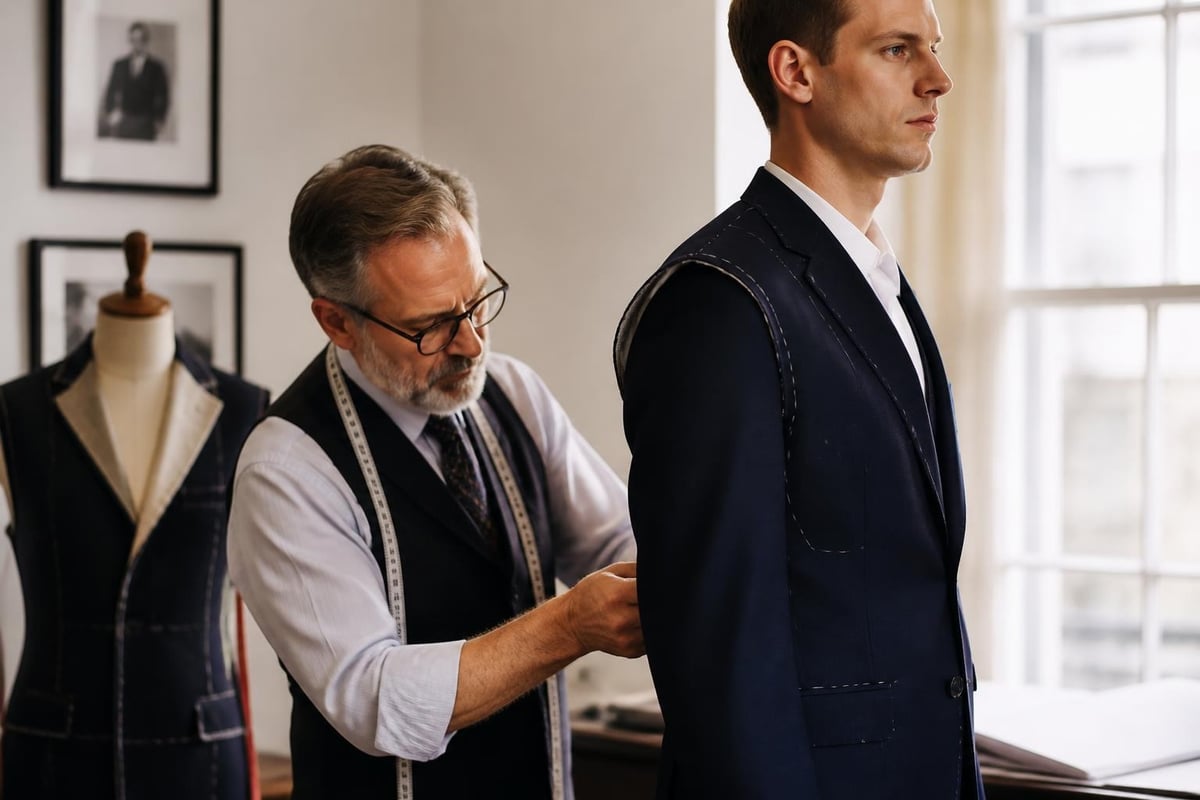
The initial fitting occurs with the garment partially constructed, often called a "basted fitting." Pieces are temporarily joined, allowing the tailor to assess fit and make significant adjustments before final construction. During this session, tailors evaluate:
| Assessment Area | What's Being Checked | Potential Adjustments |
|---|---|---|
| Overall Balance | How the garment sits on the body | Shoulder adjustments, length changes |
| Sleeve Fit | Arm movement and sleeve pitch | Sleeve rotation, length modification |
| Body Fit | Chest, waist, and hip proportions | Taking in or letting out seams |
| Collar & Lapels | Neck fit and lapel roll | Collar height, lapel width |
Clients should wear appropriate undergarments and shoes to these fittings, as these items affect how the garment sits and its apparent length.
Final Fitting Refinements
The second fitting presents a nearly complete garment requiring minor adjustments. This session focuses on fine-tuning details like button placement, sleeve length precision, and final trouser hem height. Experienced tailors can identify issues invisible to untrained eyes, such as slight pulling across the back or collar gaps that appear only during movement.
For visitors to destinations like Ao Nang, timing these fittings requires planning. Reputable establishments work with travelers' schedules, sometimes accommodating faster turnarounds or arranging shipping for final delivery if necessary.
Service Excellence and Client Relationships
Beyond technical skill, successful bespoke tailors shops excel at customer service and relationship building. The history of bespoke tailoring reveals that personal relationships between tailor and client have always formed the industry's foundation.
Consultation Quality
Initial consultations set the tone for the entire experience. Professional tailors ask detailed questions about:
- Lifestyle and clothing needs
- Professional requirements or dress codes
- Personal style preferences and inspirations
- Existing wardrobe and what works or doesn't
- Budget parameters and timeline expectations
This information gathering ensures the final garment serves the client's actual needs rather than simply replicating standard designs.
Record Keeping and Repeat Service
Established bespoke tailors shops maintain detailed client records including measurements, fabric preferences, style choices, and purchase history. This documentation streamlines future orders and allows the shop to alert clients about relevant new fabrics or suggest wardrobe additions based on previous purchases.
For businesses like Alex’s Fashion, serving both local clients and international visitors, these records prove invaluable when clients return months or years later.
Investment Considerations and Value
Pricing in a bespoke tailors shop reflects the labor, expertise, and materials involved. A custom suit requires 40 to 60 hours of skilled work from measurement through final delivery. When evaluating costs, clients should consider:
Immediate factors:
- Fabric quality and origin
- Construction complexity
- Number of fittings required
- Turnaround time needed
Long-term value:
- Garment longevity and durability
- Perfect fit reducing alteration needs
- Timeless styling versus trendy designs
- Emotional value and wearing confidence
Research indicates bespoke tailoring remains commercially viable in 2026, with strong demand from clients valuing quality and personalization. The investment in a well-made bespoke garment often proves economical over time compared to repeatedly purchasing and altering ready-made alternatives.
Expanded Service Offerings
Modern bespoke tailors shops often provide services beyond traditional suiting. Comprehensive establishments create:
- Business wardrobes including suits, trousers, and dress shirts
- Formal occasion wear for weddings and special events
- Casual custom clothing from sport coats to linen trousers
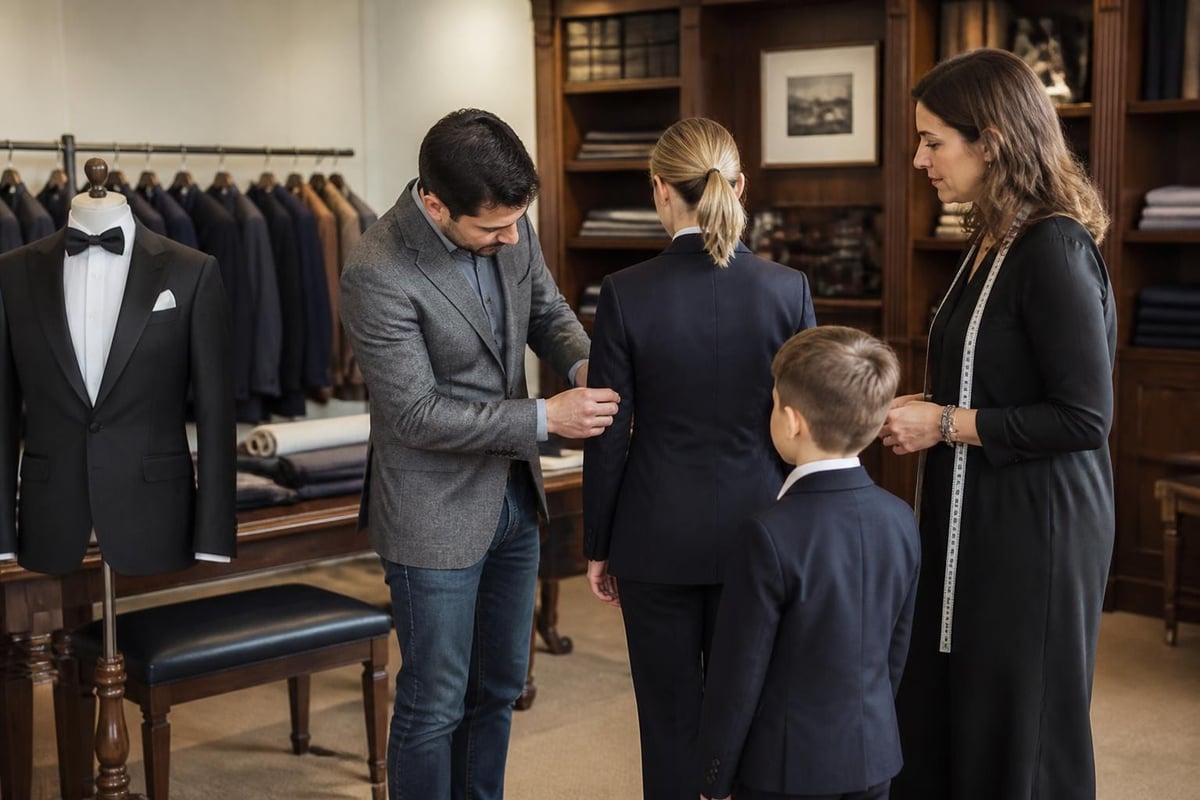
- Women's tailoring including suits, dresses, and blouses
- Children's formal wear for special occasions
This versatility allows clients to develop entire wardrobes with consistent quality and fit. Some shops also offer alteration services for existing garments, applying their expertise to improve ready-made items.
Specialty Items and Occasion Wear
Certain events demand specialized garments that benefit enormously from bespoke treatment. Wedding attire, whether traditional suits or cultural dress, requires perfect fit and often incorporates specific design elements. A skilled bespoke tailors shop works with clients to blend personal style, cultural traditions, and contemporary aesthetics.
For destination events, such as weddings in tropical locations like Krabi, tailors can recommend fabric weights and construction details that ensure comfort in warm, humid conditions while maintaining formal appearance standards.
Global Standards and Local Expertise
While Savile Row’s legacy continues influencing global tailoring standards, excellent bespoke work occurs worldwide. Establishments in Southeast Asia, particularly Thailand, have developed strong reputations for quality craftsmanship at competitive pricing.
The key lies in finding tailors who:
- Maintain high construction standards regardless of location
- Source quality fabrics from reputable mills
- Employ experienced craftspeople with proper training
- Allow adequate time for multiple fittings
- Stand behind their work with guarantees
Geographic advantages in places like Thailand include access to skilled labor, competitive operating costs, and fabric sourcing proximity. These factors don't compromise quality when paired with proper expertise and standards.
Industry Challenges and Evolution
The tailoring industry faces workforce challenges as experienced tailors age and fewer young people enter the profession. This reality makes finding established shops with skilled teams increasingly valuable. Businesses with decades of experience possess not just technical knowledge but refined understanding of fit, proportion, and customer service.
Despite these challenges, the industry adapts. Digital tools now assist with measurements and visualization, though they complement rather than replace human expertise. Some shops offer virtual consultations, expanding their reach while maintaining quality standards through careful process management.
Nachhaltigkeit und ethische Praktiken
Modern consumers increasingly consider the ethical dimensions of their purchases. Bespoke tailoring inherently aligns with sustainable fashion principles:
- Langlebigkeit through quality construction and timeless design
- Waste reduction via precise cutting and made-to-order production
- Fair labor when shops maintain ethical employment practices
- Local economy support through skilled job creation
These factors appeal to luxury consumers shifting toward longevity and craftsmanship, making bespoke options increasingly relevant in contemporary fashion discourse.
Maximizing Your Bespoke Experience
Getting the most from a bespoke tailors shop requires client participation and clear communication. Successful outcomes depend on collaborative relationships between tailor and customer.
Before your appointment:
- Research basic terminology to facilitate discussions
- Gather inspiration images showing styles you appreciate
- Consider your lifestyle needs and wearing occasions
- Establish a realistic budget including potential accessories
- Allow adequate time for the complete process
During consultations and fittings:
- Communicate honestly about comfort and preferences
- Trust the tailor's expertise on technical matters
- Ask questions about processes or recommendations
- Wear appropriate undergarments and shoes to fittings
- Move naturally so the tailor can assess fit during activity
After delivery:
- Follow care instructions to maintain garment quality
- Return for any necessary minor adjustments
- Provide feedback to help the shop serve you better
- Keep contact information for future orders or questions
This collaborative approach ensures both parties work toward the shared goal of creating garments that exceed expectations and provide years of satisfaction.
Selecting and working with a quality bespoke tailors shop transforms your relationship with clothing, replacing generic fit with personalized perfection that reflects your individual style and needs. Whether you're building a professional wardrobe, preparing for a special occasion, or simply seeking garments that fit properly and last for years, bespoke tailoring delivers value that ready-made alternatives cannot match. With over 30 years of expertise creating custom clothing for men, women, and children using world-class fabrics, Alex’s Fashion brings traditional craftsmanship and exceptional service to clients in Ao Nang and beyond, ensuring every garment meets your exact specifications and exceeds your expectations.