
 DE
DE  EN
EN  FR
FR  TH
TH 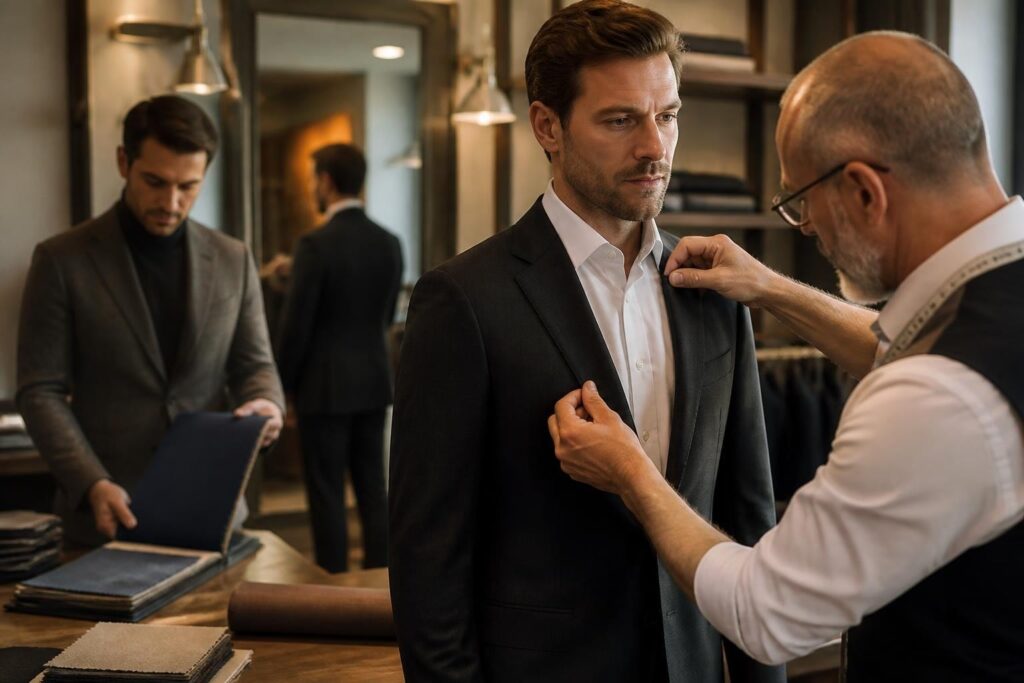
The world of mens custom suits represents the pinnacle of personal style and sartorial excellence. Unlike off-the-rack alternatives, custom suits are meticulously crafted to match your exact measurements, preferences, and lifestyle needs. Whether you're preparing for important business meetings, special occasions, or building a refined professional wardrobe, understanding the intricacies of bespoke tailoring can transform your approach to menswear. With the resurgence of bespoke suiting in modern fashion, more men are discovering the unmatched quality and fit that custom tailoring provides.
Understanding the Custom Suit Process
Creating mens custom suits involves a collaborative journey between you and your tailor. This process ensures every detail aligns with your vision and body specifications.
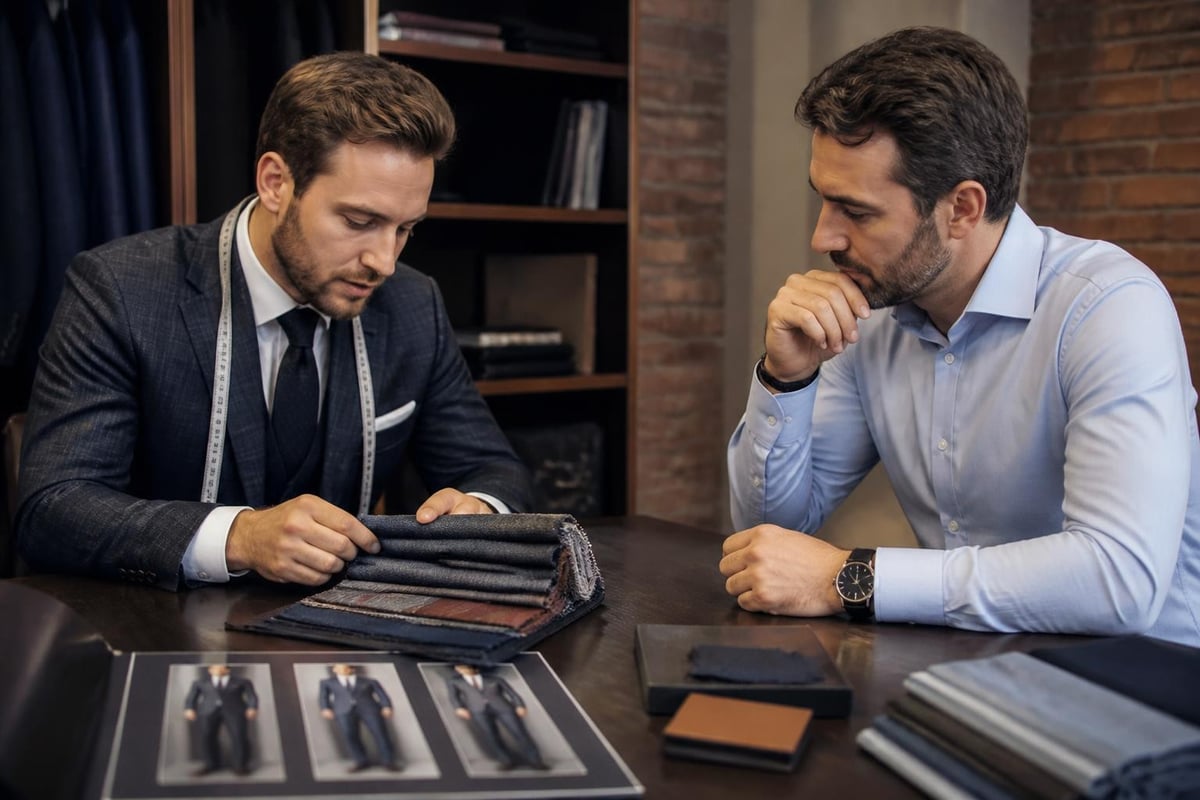
Initial Consultation and Style Selection
The foundation of any exceptional custom suit begins with a thorough consultation. During this meeting, you'll discuss:
- Your intended use for the suit (business, formal events, casual occasions)
- Preferred styles, including lapel types, button configurations, and pocket styles
- Color preferences and pattern selections
- Budget considerations and timeline requirements
Your tailor will guide you through various style options, from classic single-breasted suits to more contemporary double-breasted designs. This conversation establishes the roadmap for your garment's creation.
Understanding your lifestyle is crucial during this phase. A suit designed for tropical climates like Thailand requires different fabric choices than one intended for colder regions. The consultation also addresses details such as lining preferences, functional versus decorative buttons, and personalized monogramming options.
Fabric Selection and Quality Considerations
Choosing the right fabric represents one of the most critical decisions in the custom suit process. World-class fabrics come from renowned mills across the globe, each offering distinct characteristics.
| Stoff Typ | Am besten für | Saison | Dauerhaftigkeit |
|---|---|---|---|
| Super 100s Wool | Daily business wear | Das ganze Jahr über | Ausgezeichnet |
| Super 150s Wool | Special occasions | Cool weather | Gut |
| Linen Blends | Tropical climates | Sommer | Mäßig |
| Wool-Silk Blends | Formal events | Frühling/Herbst | Very Good |
| Wool-Cashmere | Luxury suits | Cool/Cold | Ausgezeichnet |
The "Super" numbering system indicates fiber fineness, with higher numbers representing softer, more luxurious fabrics. However, higher Super numbers don't always mean better durability for everyday wear.
Consider your climate when selecting fabrics. In tropical locations like Krabi, lightweight wool blends or breathable fabrics ensure comfort without sacrificing sophistication. Your tailor's expertise in matching fabrics to environmental conditions proves invaluable.
The Measurement and Fitting Experience
Precision measurements distinguish truly exceptional mens custom suits from mediocre alternatives. This stage requires expertise, patience, and attention to detail.
Comprehensive Measurement Techniques
Professional tailors take numerous measurements to ensure perfect fit:
- Breite der Schultern across the back at the widest point
- Chest circumference at the fullest part
- Waist measurement at your natural waistline
- Hip measurement for proper jacket and trouser balance
- Sleeve length from shoulder seam to wrist bone
- Inseam and outseam for trouser length and rise
- Neck circumference for collar comfort
- Back length from neck to desired jacket hem
Beyond basic measurements, experienced tailors observe your posture, shoulder slope, and any asymmetries. These observations inform necessary adjustments that ensure comfortable, flattering fit.
The measurement process for mens custom suits also includes discussing your preferences for fit style. Modern slim fits differ significantly from classic fits, and your tailor should accommodate your comfort level while ensuring contemporary styling.
Multiple Fittings for Perfection
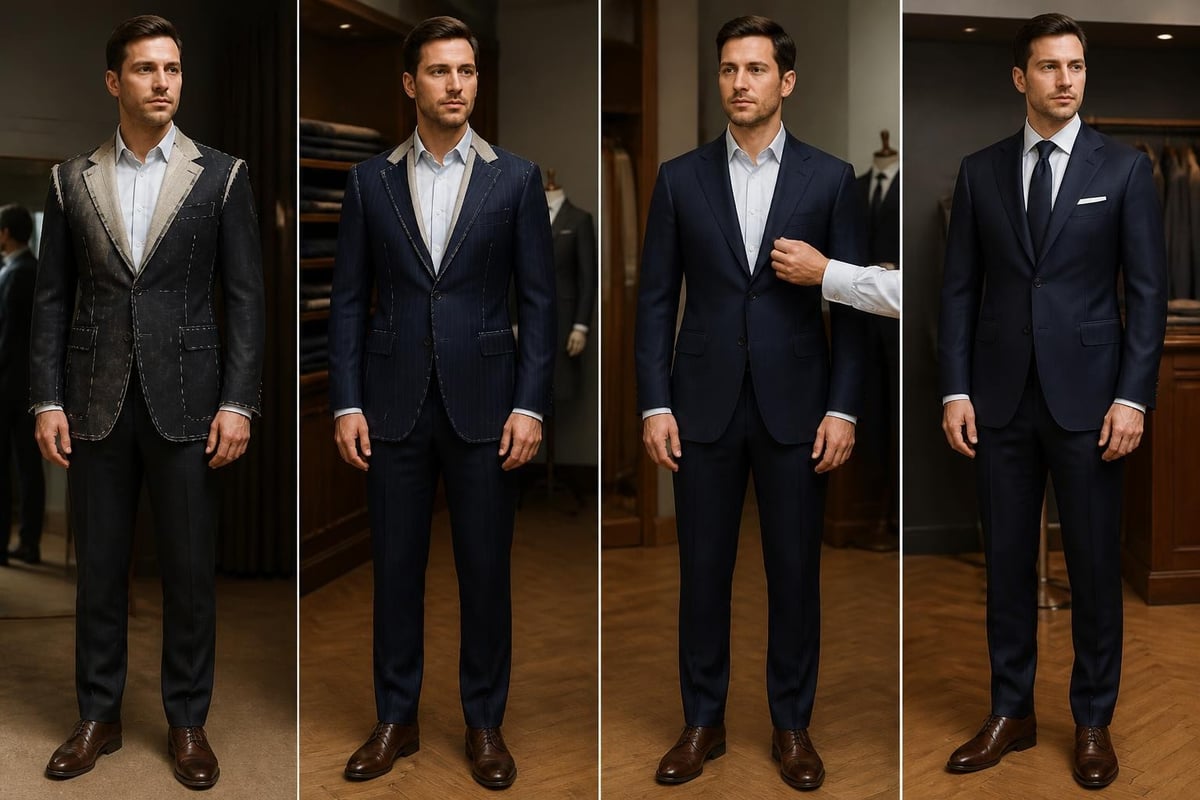
The bespoke process typically involves several fittings:
- First fitting: Basted garment allows major adjustments
- Second fitting: Refined alterations and detail confirmation
- Final fitting: Minor tweaks and quality verification
Each fitting session provides opportunities to refine the suit's fit and address concerns. This iterative process, while time-intensive, ensures the finished garment meets exacting standards. According to comprehensive guides on custom suits, this multi-fitting approach separates true bespoke from made-to-measure services.
Design Elements That Define Your Suit
Personalization options for mens custom suits extend far beyond basic measurements. These design choices express your individual style and preferences.
Lapel Styles and Their Impact
Lapel selection significantly influences your suit's overall aesthetic:
Notch lapels remain the most versatile choice, suitable for business and semi-formal occasions. They work particularly well with single-breasted jackets and create a balanced, professional appearance.
Peak lapels convey sophistication and formality. While traditionally associated with double-breasted suits, peak lapels on single-breasted jackets make bold style statements.
Shawl lapels appear primarily on tuxedos and formal dinner jackets. Their continuous roll creates elegant, distinctive silhouettes.
The width of your lapels should complement your build and current style preferences. Wider lapels suit broader frames and create classic looks, while narrower lapels offer contemporary, streamlined appearances.
Pocket Configurations and Functionality
Pockets serve both practical and aesthetic purposes:
- Patch pockets: Casual, sporty appearance
- Flap pockets: Most common, versatile option
- Jetted pockets: Sleek, formal presentation
- Ticket pockets: Traditional British detail
Breast pockets typically include welted openings for pocket squares. Some prefer functional breast pockets, though many consider them unnecessary in modern suiting.
Button Selection and Placement
Button choices impact both function and style. Options include:
| Button Style | Material | Am besten für | Formality Level |
|---|---|---|---|
| Horn | Natural buffalo horn | Business suits | Hoch |
| Mother-of-Pearl | Natural shell | Formal occasions | Very High |
| Corozo Nut | Natural vegetable ivory | Versatile wear | Medium-High |
| Synthetic | Various plastics | Budget options | Variabel |
Button stance (the position where the jacket fastens) affects proportions. Higher stances create longer leg lines, while lower stances offer classic elegance.
Trouser Design and Customization
While jackets receive primary attention, trouser design equally contributes to overall suit quality. Custom trousers ensure proper fit and complement your jacket perfectly.
Rise and Fit Considerations
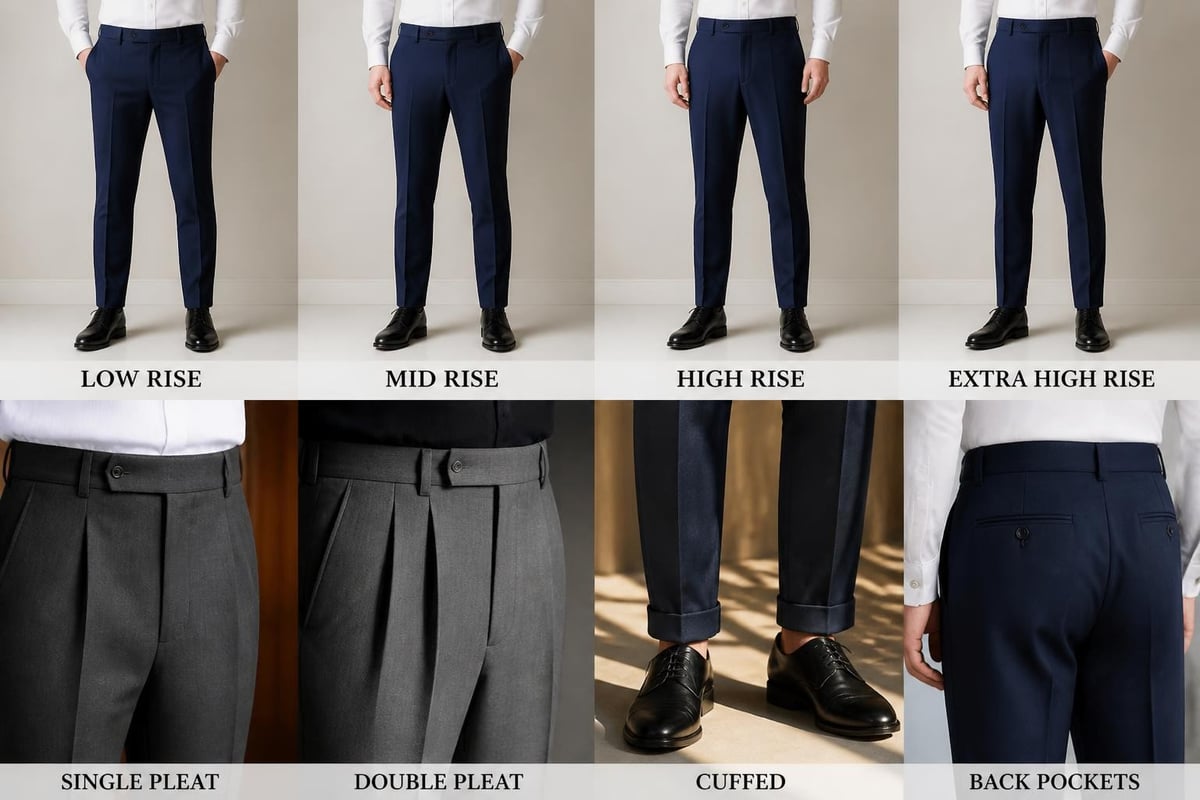
Trouser rise affects comfort and appearance:
High-rise trousers sit at or above the natural waist, providing classic proportions and comfort when seated. They pair beautifully with vests and work well for formal occasions.
Mid-rise trousers offer contemporary styling while maintaining comfort. This option suits most body types and occasions.
Low-rise trousers create modern, casual aesthetics but may compromise comfort during extended wear.
Your tailor will recommend appropriate rise based on your build, preferences, and intended use. The best mens suits often feature properly proportioned trousers that enhance overall silhouette.
Pleats, Cuffs, and Finishing Details
Detail choices personalize your trousers:
- Flat front creates clean, modern lines
- Single pleat adds subtle dimension and wearing comfort
- Double pleats provide traditional styling and extra room
- Plain hem offers versatile, contemporary finish
- Cuffed hem delivers classic, polished appearance
Cuff width typically ranges from 1.5 to 2 inches, with wider cuffs suiting taller individuals and fuller-cut trousers. Your tailor will ensure proportional balance between trouser width, length, and cuff size.
Lining and Interior Construction
The interior of mens custom suits reveals craftsmanship quality and affects wearing comfort. These hidden elements separate exceptional suits from ordinary ones.
Full Canvas versus Fused Construction
Canvas construction methods significantly impact how suits wear and age:
Full canvas construction uses horsehair canvas hand-stitched throughout the jacket front. This traditional method allows the jacket to mold to your body over time, creating increasingly personalized fit. Full canvas suits breathe better and maintain shape exceptionally well.
Half canvas construction features canvas in the chest area with fused material below. This approach balances traditional benefits with modern efficiency.
Fused construction glues interlining to outer fabric. While less expensive, fused construction may bubble or delaminate over time with dry cleaning.
For tropical climates, unlined or quarter-lined jackets provide superior breathability. Your tailor can customize lining extent based on climate and preference.
Functional Details and Hand Finishing
Quality indicators include:
- Working buttonholes on jacket sleeves (surgeon's cuffs)
- Pick stitching along lapel edges for definition
- Hand-sewn button attachment for durability
- Clean interior seams finished with French seams or binding
- Functional sleeve vents allowing movement
These details require skilled craftsmanship and significantly extend garment longevity. When evaluating mens custom suits, examining interior construction reveals true quality levels.
Investment Value and Long-Term Benefits
Understanding the economics of mens custom suits helps justify the investment and maximize value over time.
Cost Considerations and Value Analysis
Custom suit pricing varies based on several factors:
- Fabric quality and origin
- Construction method (full bespoke versus made-to-measure)
- Number of fittings included
- Hand-finishing extent
- Designer reputation and location
While custom suits require higher initial investment than off-the-rack options, they deliver superior value through perfect fit, longevity, and timeless style. A well-maintained custom suit can serve you for decades, making the cost-per-wear remarkably economical.
According to insights from custom tailoring processes, made-to-measure options provide middle-ground pricing between ready-to-wear and full bespoke, making custom suiting accessible to broader audiences.
Maintenance and Care Guidelines
Proper care extends your suit's lifespan significantly:
- Brush your suit after each wear to remove surface dirt
- Use wooden hangers that match shoulder width
- Rotate suits regularly to allow fabric recovery between wears
- Steam rather than iron when possible to avoid shine
- Professional dry cleaning only when necessary (2-3 times annually)
- Address stains immediately with appropriate spot treatments
- Store in breathable garment bags to protect from dust
Between professional cleanings, airing suits outdoors (avoiding direct sunlight) refreshes fabrics naturally. This practice proves particularly valuable in humid climates.
Choosing the Right Tailor for Your Needs
Selecting an experienced, reputable tailor ensures your investment yields exceptional results. This decision impacts not just your suit's quality but your entire experience.
Evaluating Expertise and Experience
When assessing tailors, consider:
Years of experience indicate skill development and refined techniques. Establishments with decades of service have perfected their craft through countless garments.
Portfolio examination reveals style range and execution quality. Review previous work to ensure aesthetic alignment with your preferences.
Client testimonials provide insights into service quality, communication, and satisfaction levels. Positive long-term client relationships indicate consistent excellence.
Consultation approach demonstrates whether the tailor listens to your needs and offers informed guidance. The best tailors balance your preferences with professional expertise.
For those seeking expert bespoke tailoring services, established businesses with proven track records offer peace of mind and quality assurance.
Communication and Relationship Building
Successful custom suiting requires clear communication between you and your tailor:
- Express preferences clearly while remaining open to professional suggestions
- Provide feedback honestly during fittings
- Understand that achieving perfection may require patience
- Build ongoing relationships for future garments and alterations
Long-term relationships with skilled tailors yield increasingly satisfying results as they learn your preferences, body characteristics, and lifestyle needs.
Current Trends in Mens Custom Suits
While custom suiting emphasizes timeless elegance, contemporary trends influence style choices without compromising classic foundations.
Modern Silhouettes and Proportions
Current preferences lean toward:
Slimmer fits with higher armholes for improved mobility and contemporary appearance. However, "slim" should never compromise comfort or create pulling across chest or back.
Shorter jacket lengths that end just below the seat, creating longer leg lines and modern proportions.
Narrower lapels typically ranging from 2.75 to 3.5 inches, though wider lapels are regaining popularity for certain styles.
Cropped trouser lengths showing slight ankle exposure, though traditional full breaks remain appropriate for conservative business environments.
These trends should enhance rather than dictate your choices. Custom suiting allows you to adopt preferred elements while maintaining personal style integrity.
Fabric Patterns and Textures
Popular pattern choices include:
| Muster Typ | Formality | Vielseitigkeit | Best Occasions |
|---|---|---|---|
| Solid Navy/Charcoal | Hoch | Ausgezeichnet | All business settings |
| Subtle Windowpane | Medium-High | Very Good | Business, events |
| Glen Plaid | Medium | Gut | Smart business casual |
| Herringbone | Medium | Very Good | Versatile wear |
| Bold Chalk Stripe | Medium-High | Mäßig | Power dressing |
Texture adds visual interest without pattern boldness. Nailhead, birdseye, and subtle herringbone weaves provide depth while maintaining professional appearance.
Seasonal Considerations for Tropical Climates
For locations like Krabi, Thailand, fabric and construction choices must account for heat and humidity while maintaining polished presentation.
Optimal Fabric Weights and Blends
Tropical climate suiting requires:
- Lightweight wool (7-9 oz) that breathes well yet maintains structure
- Wool-mohair blends offering exceptional heat tolerance and wrinkle resistance
- High-twist yarns creating breathable, crisp fabrics
- Open weaves allowing air circulation
Avoid heavy fabrics exceeding 11 oz, as they retain heat and prove uncomfortable in humid conditions. Linen suits offer superior cooling but wrinkle readily, making them better suited for casual occasions.
Construction Modifications for Heat
Climate-appropriate adjustments include:
- Unlined or quarter-lined jackets for maximum breathability
- Natural shoulder construction without excessive padding
- Lighter-weight canvas maintaining structure without bulk
- Moisture-wicking pocket bags using cotton or silk
- Extended vents improving air circulation
These modifications ensure comfort without sacrificing the sophisticated appearance that mens custom suits provide. Experienced tailors in tropical regions understand these necessities and incorporate them seamlessly.
Building a Custom Suit Wardrobe
Strategic wardrobe development ensures versatility and value from your custom suit investment.
Essential First Suits
Begin your custom suit collection with foundational pieces:
Navy solid suit serves as your most versatile option, appropriate for virtually all business and formal occasions. This should be your first investment.
Charcoal gray suit provides equally broad utility with slightly different aesthetic. Together, navy and charcoal cover most professional needs.
Mid-gray suit adds variety while maintaining conservative professionalism. Consider subtle patterns like micro-checks or birdseye for visual interest.
These three suits, properly cared for and rotated, create comprehensive professional wardrobes suitable for years of wear.
Expanding with Complementary Pieces
Once foundational suits are established, consider:
- Navy blazer with gray trousers for mix-and-match versatility
- Brown or tan suit for spring and summer occasions
- Patterned suit (windowpane, plaid, or stripe) for confident style expression
- Formal dinner suit if your lifestyle includes black-tie events
Each addition should fill specific gaps in your wardrobe while coordinating with existing pieces. Your tailor can help plan strategic acquisitions that maximize versatility.
Creating exceptional mens custom suits requires expertise, quality materials, and meticulous attention to detail throughout the tailoring process. From initial consultation through final fitting, each step contributes to garments that fit perfectly, express personal style, and deliver lasting value. With over 30 years of experience crafting bespoke clothing, Alex’s Fashion combines traditional tailoring excellence with world-class fabrics to create custom suits that exceed expectations. Whether you're building your first custom wardrobe or adding to an established collection, their expert team in Ao Nang ensures every garment reflects your unique requirements and delivers the perfect fit you deserve.