
 TH
TH  EN
EN  FR
FR  DE
DE 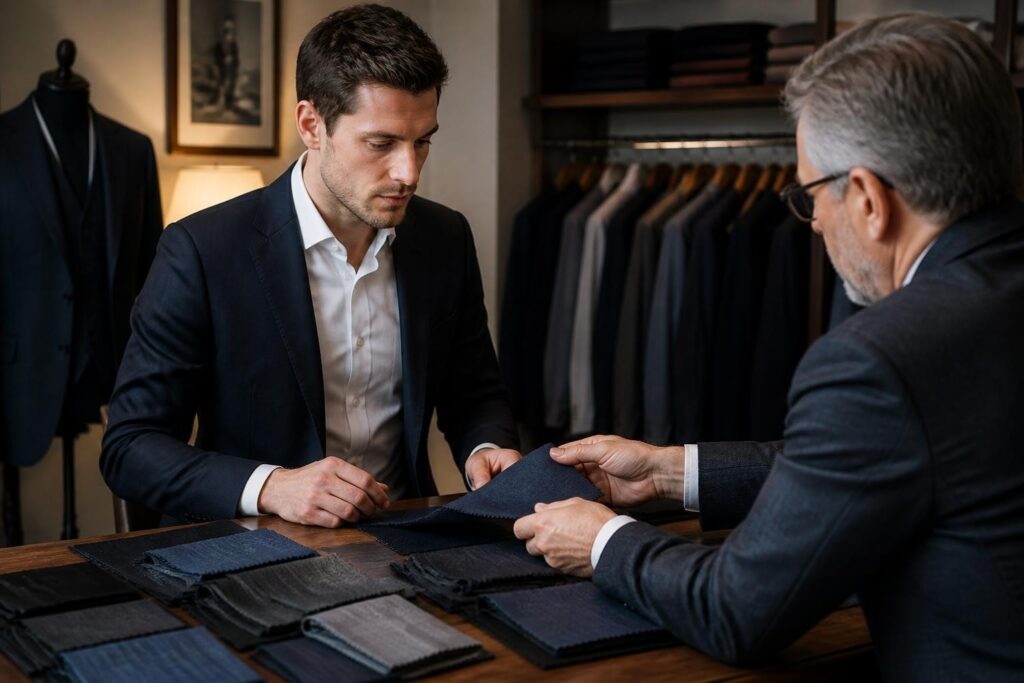
Choosing the right wedding suit tailor represents one of the most important decisions a groom will make during wedding preparation. Unlike off-the-rack options, a custom-tailored wedding suit ensures perfect fit, personalized style, and exceptional quality that photographs beautifully and creates lasting memories. Whether you're planning a beach ceremony in tropical paradise or a formal ballroom celebration, working with an experienced wedding suit tailor transforms your vision into a garment that reflects your personality and complements your wedding theme.
Understanding the Value of Custom Wedding Suits
A wedding suit tailor brings specialized expertise that extends far beyond simple alterations. These craftsmen understand body proportions, fabric behavior, and style elements that create a polished, sophisticated appearance. The difference between a well-tailored suit and a standard option becomes immediately apparent in photographs and throughout your wedding day.
Why Bespoke Tailoring Matters for Weddings
Custom wedding suits offer distinct advantages:
- Perfect fit across shoulders, chest, waist, and sleeve length
- Personalized fabric selection matching wedding colors and season
- Unique design elements reflecting individual style preferences
- Superior construction ensuring comfort during long celebration hours
- Lasting quality allowing wear for future formal occasions
The investment in bespoke tailoring pays dividends through confidence and comfort. Grooms wearing properly fitted suits move naturally, photograph better, and focus on celebrating rather than adjusting ill-fitting garments. At Alex’s Fashion, over three decades of experience ensures each wedding suit meets exacting standards.
Selecting the Right Wedding Suit Tailor
Finding the perfect wedding suit tailor requires research, consultations, and understanding what distinguishes exceptional craftsmen from average providers. The relationship between tailor and client becomes collaborative, with both parties contributing to the final result.
Key Qualifications to Consider
When evaluating potential tailors, examine their experience specifically with wedding attire. A skilled wedding suit tailor understands the pressure of deadlines, the importance of multiple fittings, and the need for perfection on this significant occasion.
| คุณสมบัติ | ทำไมจึงสำคัญ | Questions to Ask |
|---|---|---|
| Years of Experience | Demonstrates refined techniques and problem-solving abilities | How many wedding suits do you create annually? |
| Portfolio Quality | Shows style range and attention to detail | May I see examples of recent wedding suits? |
| Fabric Sources | Indicates access to premium materials | What fabric collections do you offer? |
| Timeline Management | Ensures completion before wedding date | What's your typical production schedule? |
| Fitting Process | Reveals commitment to perfect fit | How many fittings are included? |
Experience matters tremendously in wedding suit creation. Tailors who have crafted hundreds of wedding suits anticipate fit challenges, understand fabric draping, and execute complex construction techniques flawlessly.
กระบวนการปรึกษาหารือ
Initial consultations with a wedding suit tailor establish expectations, explore style preferences, and create project timelines. This meeting sets the foundation for successful collaboration.
Prepare for your consultation by:
- Researching suit styles that appeal to your aesthetic
- Considering your wedding venue and formality level
- Determining your budget parameters
- Bringing inspiration photos or style references
- Understanding your wedding timeline
Professional tailors ask detailed questions about wedding themes, color schemes, and personal preferences. They guide fabric selection, recommend style elements appropriate for your build, and explain construction methods that ensure durability and comfort.
Fabric Selection for Wedding Suits
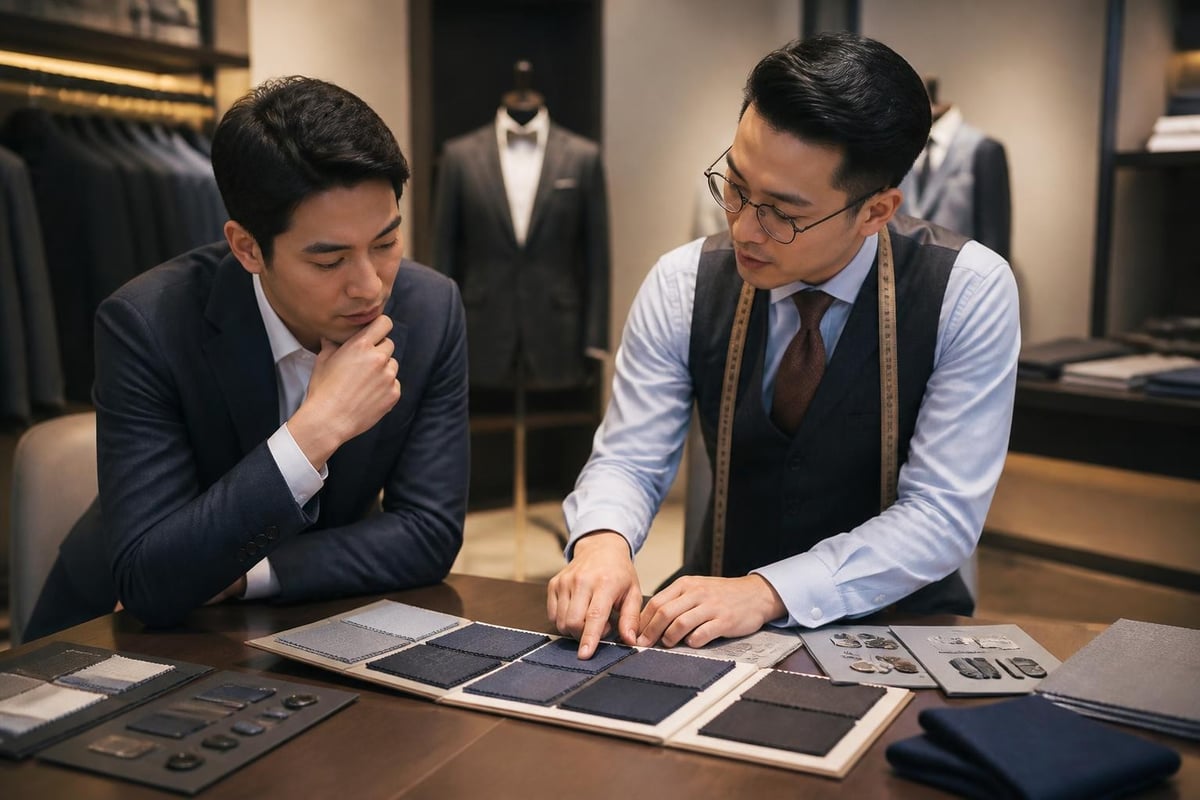
Choosing the right fabric with your wedding suit tailor influences appearance, comfort, and longevity. Different materials offer unique characteristics suited to various climates, seasons, and formality levels.
Premium Fabric Options
Wool remains the most popular choice for wedding suits:
- Super 100s-120s Wool: Excellent balance of durability and softness
- Super 150s-180s Wool: Luxurious drape with refined appearance
- Wool-Silk Blends: Enhanced sheen for formal celebrations
- Tropical Wool: Lightweight construction for warm-weather weddings
- Wool-Linen Blends: Breathable option for summer ceremonies
Your wedding suit tailor considers climate conditions when recommending fabrics. Tropical destinations require lighter-weight materials that resist wrinkling and allow airflow, while cooler climates accommodate heavier constructions.
Color and Pattern Considerations
Beyond fabric type, color selection significantly impacts your overall wedding aesthetic. A knowledgeable wedding suit tailor helps coordinate suit color with wedding palette, venue atmosphere, and personal coloring.
| Color Choice | เหมาะที่สุดสำหรับ | Considerations |
|---|---|---|
| Navy Blue | Traditional, versatile ceremonies | Photographs beautifully, works year-round |
| Charcoal Gray | Formal, sophisticated weddings | Complements most color schemes |
| Light Gray | Daytime, spring/summer events | Creates relaxed, refined appearance |
| Tan/Beige | Beach, destination weddings | Perfect for tropical, casual settings |
| Black | Ultra-formal evening ceremonies | Classic but potentially severe in photos |
Patterns add personality while maintaining elegance. Subtle textures, herringbone weaves, or fine checks create visual interest without overwhelming wedding photography. Your wedding suit tailor provides fabric swatches allowing you to visualize how materials photograph and complement wedding colors.
The Custom Suit Creation Timeline
Understanding the production timeline helps grooms plan appropriately and avoid last-minute stress. A professional wedding suit tailor establishes clear schedules ensuring completion well before the wedding date.
Standard Production Phases
Week 1-2: Initial Consultation and Measurement
During this phase, your wedding suit tailor takes comprehensive measurements, discusses style preferences, and helps select fabrics. Precise measurements form the foundation for proper fit, with experienced tailors recording 15-25 different body dimensions.
Week 3-4: Pattern Creation and Initial Construction
Tailors draft custom patterns based on your measurements and begin constructing the suit shell. This stage involves cutting fabric, assembling major components, and preparing for the first fitting.
Week 5-6: First Fitting
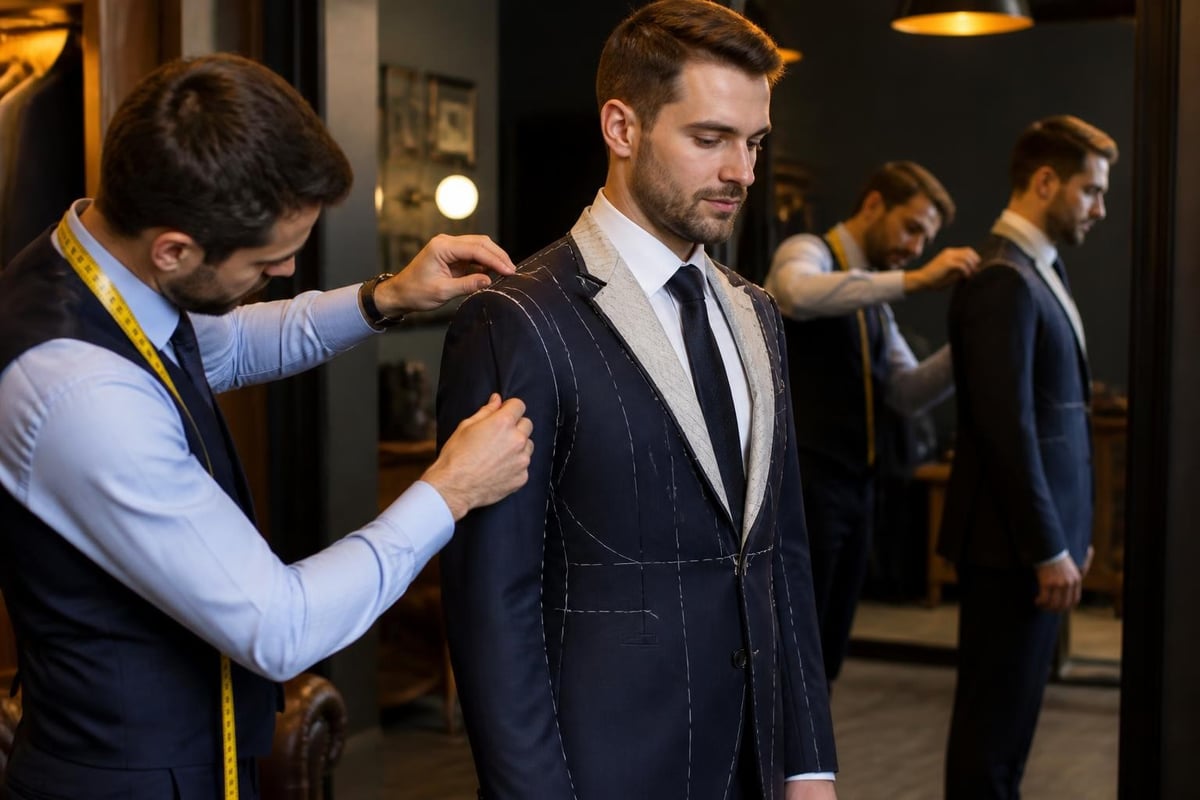
The initial fitting reveals how the suit drapes on your body. Your wedding suit tailor assesses shoulder fit, sleeve length, trouser break, and overall proportions. Adjustments are marked with chalk and pins for refinement.
Week 7-8: Refinement and Second Fitting
After making first-fitting adjustments, the tailor completes construction details and schedules a second fitting. This session fine-tunes minor issues and ensures every element sits perfectly.
Week 9-10: Final Details and Delivery
The wedding suit tailor completes finishing touches including buttonholes, final pressing, and quality inspection. Most tailors schedule final pickup or delivery one to two weeks before the wedding, allowing time for any unexpected adjustments.
Planning Your Timeline
- Book your wedding suit tailor 4-6 months before the wedding
- Complete initial consultation and measurements 3-4 months out
- Schedule fittings allowing flexible appointment times
- Plan final pickup 2-3 weeks before the ceremony
- Request an emergency fitting slot if needed closer to the date
Rush orders sometimes accommodate shorter timelines, but allowing adequate time ensures stress-free creation and perfect results.
Style Elements to Personalize Your Wedding Suit
A skilled wedding suit tailor offers extensive customization options that transform standard suits into unique expressions of personal style. These details elevate your wedding attire from ordinary to extraordinary.
Lapel Styles and Jacket Details
Lapels significantly influence suit formality and aesthetic appeal. Your wedding suit tailor explains how different lapel styles complement face shapes and wedding formality.
- Notch Lapels: Classic, versatile option for most weddings
- Peak Lapels: Formal, sophisticated choice adding elegance
- Shawl Lapels: Distinctive style for black-tie celebrations
Additional jacket customization includes:
- Button configuration (one, two, or three-button)
- Pocket styles (flap, besom, or patch)
- Ticket pockets for vintage-inspired looks
- Contrasting buttonholes in wedding colors
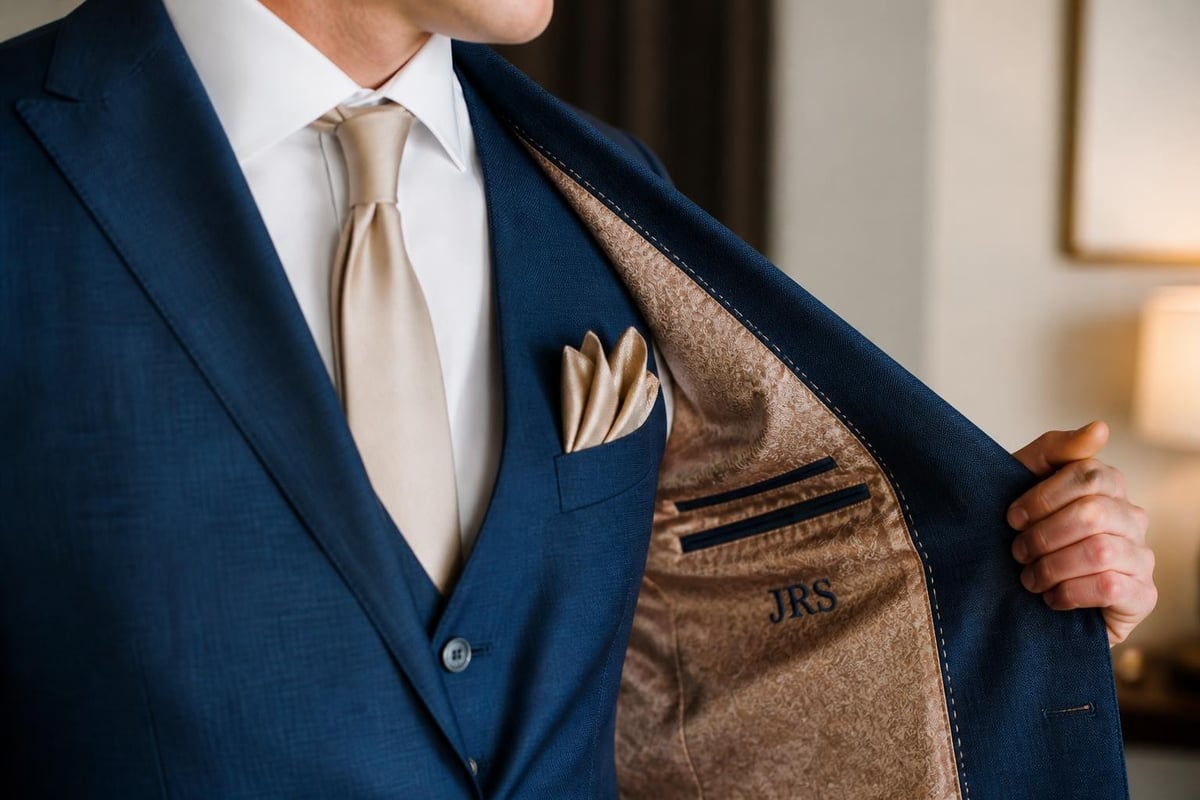
- Personalized lining with monograms or patterns
Trouser Options and Fit
Trouser cut affects overall silhouette and comfort throughout your wedding day. Modern wedding suit tailors offer various rise heights, leg widths, and finishing details.
| Trouser Feature | Traditional Choice | Modern Alternative |
|---|---|---|
| Rise | Mid-rise sitting at natural waist | Slightly lower rise for contemporary fit |
| Leg Width | Classic straight leg | Slim or tapered for sleek appearance |
| Break | Slight break touching shoe | No break for clean, modern line |
| Waistband | Flat front with side adjusters | Pleated for additional comfort |
| Cuffs | Uncuffed hem | Cuffed for added weight and drape |
Your wedding suit tailor considers body proportions when recommending trouser specifications. Taller grooms often benefit from cuffs adding visual balance, while shorter builds look better with uncuffed trousers creating unbroken leg lines.
Coordinating Wedding Party Attire
Many grooms choose to have their wedding suit tailor create coordinated attire for groomsmen, ensuring cohesive appearance in wedding photos. This approach guarantees consistent quality and fit across the entire wedding party.
Creating Unified Looks
Coordination strategies include:
- Identical suits in matching fabric and style
- Same suit style with varied accessories
- Complementary colors within similar aesthetic
- Groom distinction through unique details or accessories
- Mix-and-match approach with consistent elements
Working with a single wedding suit tailor for the entire party simplifies logistics, ensures color matching, and often provides group pricing advantages. The tailor manages multiple fittings efficiently and maintains consistent quality standards across all garments.
Accessory Selection
Beyond the suit itself, a knowledgeable wedding suit tailor advises on accessories completing your wedding look. These finishing touches should harmonize with suit style and wedding theme.
- Shirts: White or ivory for formal, colored or patterned for personality
- Ties or Bow Ties: Coordinating with wedding colors and formality
- Pocket Squares: Adding visual interest and color accents
- Cufflinks: Personal touches reflecting interests or family heritage
- Shoes and Belts: Leather matching and appropriate formality
Maintaining Your Wedding Suit Investment
After your wedding suit tailor delivers your finished garment, proper care ensures it remains pristine for the ceremony and serves you for years afterward. Quality bespoke suits justify their investment through longevity when maintained correctly.
Pre-Wedding Care
Once you receive your completed suit, store it properly to maintain its shape and appearance. Your wedding suit tailor typically provides a garment bag and care instructions specific to your chosen fabric.
Before the wedding:
- Hang on substantial wooden hangers maintaining shoulder shape
- Store in breathable garment bags away from direct sunlight
- Avoid plastic dry-cleaning bags that trap moisture
- Keep in temperature-controlled environments
- Perform final try-on one week before to confirm fit
Post-Wedding Maintenance
Following your celebration, proper cleaning and storage preserve your suit's quality. Most wedding suit tailors recommend professional dry cleaning for bespoke garments rather than home cleaning methods.
| Maintenance Task | ความถี่ | Method |
|---|---|---|
| Professional Cleaning | After wedding, then annually | Reputable dry cleaner experienced with quality suits |
| Brushing | After each wear | Soft-bristled brush removing dust and lint |
| Pressing | ตามความจำเป็น | Professional pressing or careful home steaming |
| การจัดเก็บ | Long-term | Cedar closets or garment bags with moth protection |
| Inspection | Seasonally | Check for loose buttons, minor repairs needed |
Quality suits from experienced wedding suit tailors withstand years of wear when properly maintained. The construction techniques, premium fabrics, and expert craftsmanship ensure your investment provides value far beyond your wedding day.
Destination Wedding Considerations
Planning a destination wedding introduces unique factors when working with a wedding suit tailor. Geographic location, climate, and travel logistics influence fabric choices, timing, and fitting schedules.
Tropical Climate Adaptations
For beach or tropical weddings, lightweight fabrics and specific construction techniques ensure comfort in heat and humidity. An experienced wedding suit tailor understands these requirements and recommends appropriate solutions.
Tropical wedding suit features include:
- Unlined or half-lined jackets for breathability
- Lightweight tropical wool or linen-blend fabrics
- Lighter colors reflecting heat rather than absorbing
- Moisture-wicking shirt fabrics
- Relaxed fits allowing air circulation
Destination weddings in locations like Krabi, Thailand require suits that photograph beautifully while keeping grooms comfortable throughout outdoor ceremonies and celebrations. Specialized wedding suit tailors in tropical locations bring valuable expertise about fabrics and styles that perform in challenging climates.
Travel and Packing Strategies
Transporting your custom suit to destination weddings requires careful planning to prevent wrinkles and damage during transit.
- Invest in quality garment bags designed for travel
- Carry suits as airplane carry-on when possible
- Pack with tissue paper stuffed in sleeves and shoulders
- Hang immediately upon arrival allowing wrinkles to release
- Arrange hotel pressing services if needed
Some couples working with wedding suit tailors in destination locations plan fittings around pre-wedding travel, combining vacation with suit creation. This approach allows multiple fittings while exploring your wedding destination.
Budget Planning for Custom Wedding Suits
Understanding pricing structures helps grooms allocate wedding budgets appropriately and set realistic expectations when consulting wedding suit tailors. Custom suit costs vary based on fabric quality, construction complexity, and tailor expertise.
Price Factors
Several elements influence final costs:
- Fabric selection and origin
- Number of garments (jacket, vest, trousers)
- Customization complexity
- Tailor experience and reputation
- Geographic location
- Timeline (rush orders command premiums)
Premium fabrics like Super 180s wool or rare materials increase costs, while standard options provide excellent quality at accessible prices. Your wedding suit tailor should transparently explain pricing and offer options fitting various budgets without compromising essential quality.
Value Comparison
| Suit Source | Typical Cost Range | คุณภาพที่พอดี | อายุยืน | การปรับแต่ง |
|---|---|---|---|---|
| สำเร็จรูป | $300-$800 | Adequate with alterations | 2-5 years | Limited sizes and styles |
| ตัดเย็บตามสั่ง | $800-$2,000 | Good, standardized adjustments | 5-10 years | Moderate options |
| Bespoke Custom | $1,500-$5,000+ | Exceptional, unique pattern | 10-20+ years | Complete control |
When calculating value, consider cost-per-wear over the suit's lifetime. A well-crafted wedding suit serves for countless formal occasions, professional events, and special celebrations beyond your wedding day.
Questions to Ask Your Wedding Suit Tailor
Productive consultations with potential wedding suit tailors involve asking detailed questions that reveal their expertise, process, and commitment to quality. Informed clients make better decisions and establish clearer expectations.
Essential Consultation Questions
About Experience and Process:
- How many years have you specialized in wedding suits?
- What's your typical production timeline from consultation to completion?
- How many fittings are included in your standard service?
- Can you accommodate specific deadline requirements?
- What happens if adjustments are needed after final delivery?
About Materials and Construction:
- Which fabric collections do you offer?
- Are fabrics sourced internationally or locally?
- What construction methods do you use (full canvas, half canvas, fused)?
- Can I see and feel fabric samples before deciding?
- Do you offer fabric care instructions?
About Customization and Style:
- What style options and personalization features are available?
- Can you incorporate specific design elements I've seen elsewhere?
- How do you ensure the suit complements my body type?
- Do you provide style guidance based on wedding formality?
- Can you coordinate groomsmen attire as well?
These conversations help establish rapport with your wedding suit tailor while gathering information necessary for confident decision-making.
Working with International or Local Tailors
Grooms face choices between hometown tailors and destination-based craftsmen, particularly for destination weddings. Each approach offers advantages depending on circumstances, timeline, and preferences.
Benefits of Local Tailoring Expertise
Choosing a wedding suit tailor in your wedding destination provides unique advantages. Tailors in tropical locations understand climate-appropriate fabrics and construction, while local expertise ensures proper fit for destination ceremonies.
Destination tailor advantages include:
- Multiple fittings during pre-wedding visits
- Climate-specific fabric and style expertise
- Potential cost savings in certain markets
- Authentic local craftsmanship traditions
- Convenient pickup and final adjustments
For couples visiting destinations like Thailand for their weddings, working with established tailoring businesses combining traditional craftsmanship with modern techniques delivers exceptional results. These professionals understand exactly what works in local climate conditions while offering international fabric selections.
Coordinating Remote Consultations
Modern technology enables successful collaboration with wedding suit tailors regardless of location. Video consultations, digital measurements, and efficient shipping make remote partnerships viable.
- Initial video consultation discussing style and requirements
- Professional local measurement assistance or detailed self-measurement guides
- Digital fabric swatch selection and approval
- Shipped initial fitting suit with adjustment instructions
- Final refinement based on documented feedback
- Completed suit delivery with timing buffer
While remote arrangements require more coordination, they expand options beyond geographic limitations. Clear communication and detailed documentation ensure successful results even without in-person interaction.
Finding the right wedding suit tailor transforms your wedding day experience, ensuring you look and feel exceptional while celebrating this milestone. From initial consultation through final fitting, the collaboration between groom and craftsman creates garments reflecting personal style, perfect fit, and lasting quality. When you're ready to begin creating your custom wedding suit with master tailors who understand both traditional craftsmanship and modern style, Alex’s Fashion brings over 30 years of bespoke tailoring expertise to your special day, combining world-class fabrics with exceptional service in beautiful Krabi, Thailand.