
 TH
TH  EN
EN  FR
FR  DE
DE 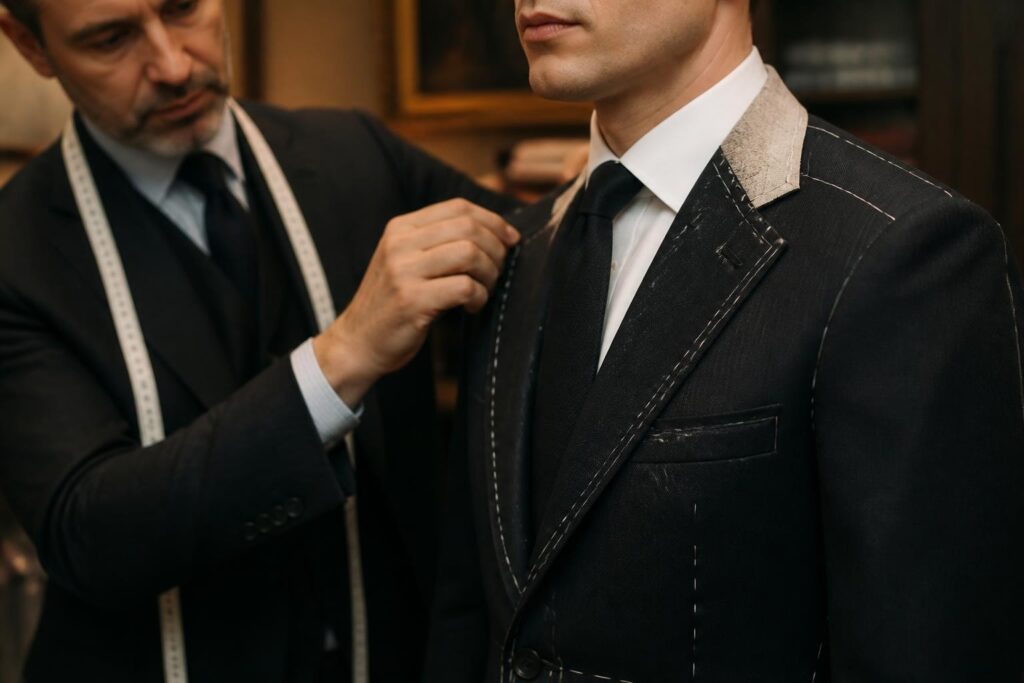
The world of men's and women's fashion has evolved dramatically over the past decades, yet one element remains timeless: the unparalleled elegance of a perfectly fitted suit. While mass-produced clothing dominates retail spaces, discerning individuals continue to seek the exceptional quality and personalized fit that only bespoke tailored suits can provide. This commitment to craftsmanship represents more than a purchase; it's an investment in garments that reflect individual personality, body shape, and style preferences with precision that off-the-rack alternatives simply cannot match.
Understanding What Makes a Suit Truly Bespoke
The term "bespoke" carries significant weight in the tailoring world, representing the pinnacle of garment construction. Bespoke tailoring originated on London's famous Savile Row, where master craftsmen would create suits "bespoken" for individual clients. This tradition involves creating a unique pattern from scratch, specifically designed for one person's measurements and body contours.
True bespoke tailored suits begin with a blank canvas. A skilled tailor takes detailed measurements, typically ranging from 25 to 35 different points across the body. These measurements capture not just basic dimensions but also account for posture variations, shoulder slopes, and individual asymmetries that characterize every human body.
The Bespoke Process Explained
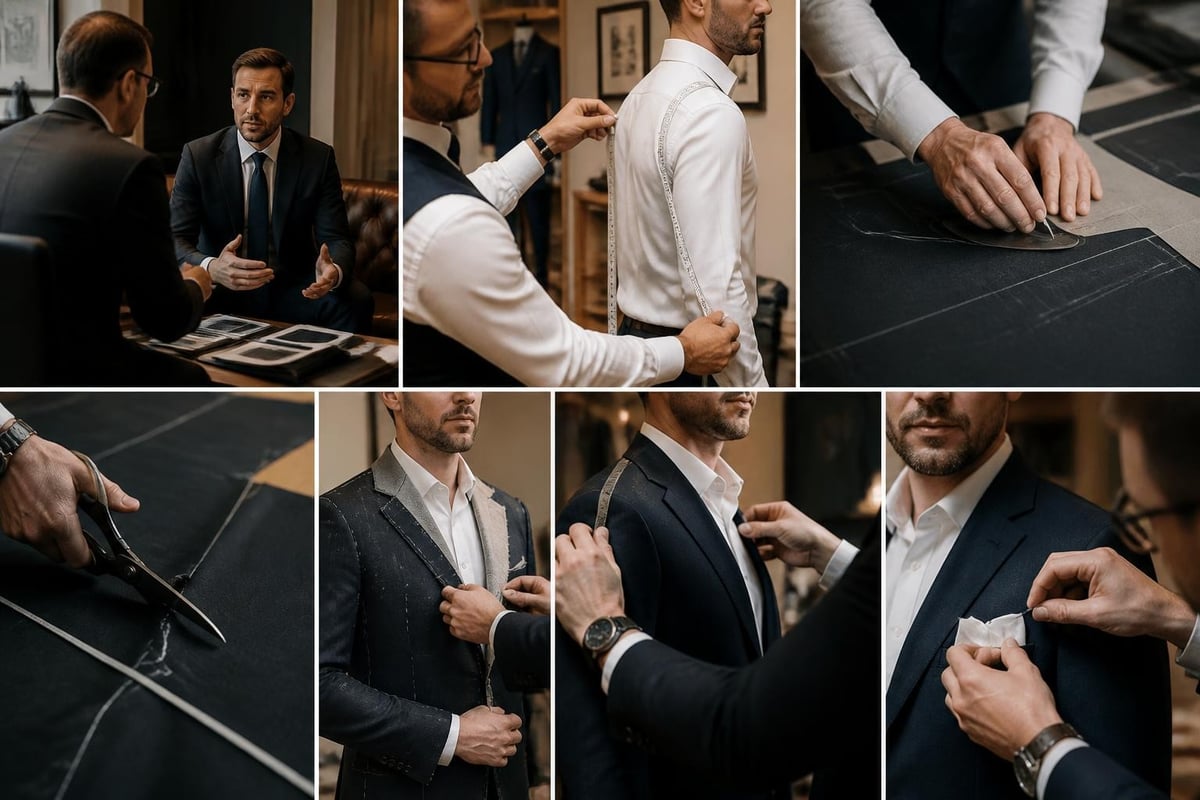
Creating bespoke tailored suits requires multiple stages of development and refinement:
- Initial consultation to discuss style preferences, fabric choices, and intended use
- Comprehensive measurement session capturing precise body dimensions
- Pattern creation developed specifically for the client's unique shape
- Fabric cutting performed by hand to ensure accuracy
- First fitting with a basted garment to verify fit and make adjustments
- Second fitting with more refined construction and detail work
- Final fitting for minor adjustments before completion
Each stage demands expertise accumulated through years of training and practice.
Bespoke Versus Made-to-Measure and Off-the-Rack
Understanding the distinctions between tailoring options helps consumers make informed decisions. The differences between bespoke, made-to-measure, and off-the-rack suits extend beyond price points to encompass construction methods, customization levels, and final quality.
| คุณสมบัติ | Bespoke | ตัดเย็บตามสั่ง | สำเร็จรูป |
|---|---|---|---|
| Pattern | Unique, created from scratch | Modified standard pattern | ขนาดมาตรฐาน |
| Fittings | 2-3 sessions minimum | 1-2 sessions typical | Alterations after purchase |
| Construction | Hand-sewn, canvas interlining | Mix of hand and machine | Fully machine-made |
| การปรับแต่ง | Unlimited options | Selected options | Limited to available stock |
| Timeline | 8-12 weeks | 4-6 weeks | Immediate to 1 week |
| Investment | Highest | ปานกลาง | Lowest |
The made-to-measure approach represents a middle ground, starting with existing patterns adjusted to individual measurements. While this method offers more personalization than ready-made options, it lacks the comprehensive customization of true bespoke work.
Why Fit Matters More Than Ever
Professional environments in 2026 increasingly value authenticity and individual expression. A poorly fitted suit communicates carelessness, while bespoke tailored suits demonstrate attention to detail and personal standards. The garment should move with the body naturally, never pulling, bunching, or restricting movement.
Finding a suit that complements your body type becomes effortless with bespoke tailoring, as every aspect adjusts to individual proportions rather than forcing the body to conform to standard sizes. This personalized approach proves particularly valuable for individuals with athletic builds, height variations, or body shapes that standard sizing fails to accommodate properly.
Fabric Selection and Quality Considerations
The foundation of exceptional bespoke tailored suits lies in fabric quality. World-class mills in Italy, England, and Scotland produce woolens that combine durability with luxurious feel. These fabrics demonstrate superior drape, resilience, and longevity compared to materials used in mass-market garments.
Understanding Fabric Weights and Weaves
Fabric weight, measured in ounces per yard, significantly impacts comfort and seasonality:
- Lightweight fabrics (7-9 oz): Ideal for tropical climates and summer wear
- Medium weight (10-12 oz): Versatile year-round options for temperate regions
- Heavyweight (13+ oz): Perfect for cooler weather and added structure
Popular weave patterns include:
- Plain weave: Smooth, formal appearance with excellent durability
- Twill weave: Diagonal pattern offering softness and drape
- Herringbone: Distinctive V-shaped pattern adding visual interest
- Hopsack: Open weave providing breathability for warmer conditions
Climate considerations prove essential when selecting fabrics. In tropical locations like Krabi, Thailand, lighter weights with breathable weaves ensure comfort while maintaining professional appearance.
Style Customization and Personal Expression
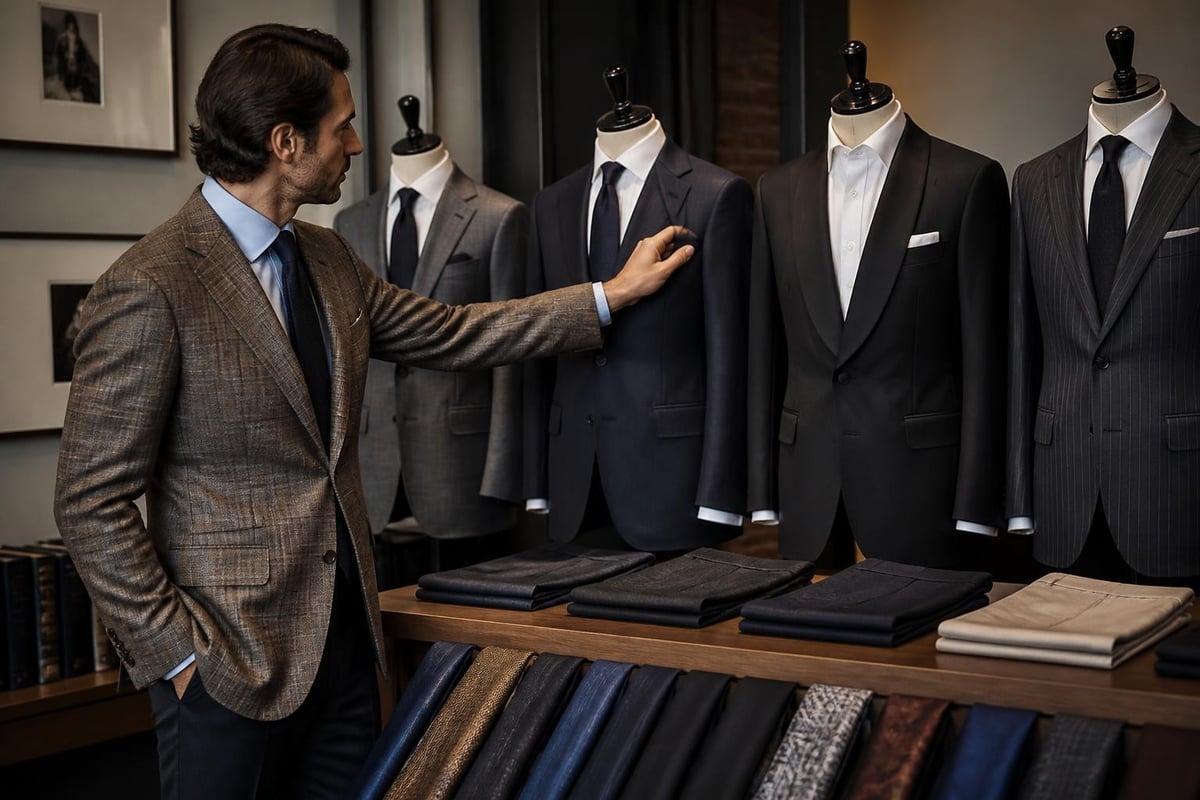
Bespoke tailored suits offer virtually unlimited customization possibilities. Every design element becomes a canvas for personal expression while maintaining appropriate formality for intended contexts.
Key Design Elements to Consider
Lapel styles communicate different aesthetic messages:
- Notch lapels work for business settings and daily professional wear
- Peak lapels project confidence and formality, suitable for executives and special occasions
- Shawl lapels appear primarily on dinner jackets and tuxedos
Jacket construction details include:
- Button configurations (one-button, two-button, three-button, or double-breasted)
- Vent options (no vent, single vent, or double vents)
- Pocket styles (flap, jetted, or patch pockets)
- Shoulder padding and construction affecting silhouette
Trouser specifications complete the ensemble:
- Pleated versus flat-front designs
- Cuff or plain hem finishes
- Rise measurements affecting comfort and proportion
- Pocket placement and styling
Traditional bespoke craftsmanship emphasizes hand-sewn details that enhance both durability and fit. These techniques include floating canvas construction, hand-stitched buttonholes, and carefully executed sleeve attachments that allow natural arm movement.
The Investment Value of Bespoke Tailoring
Price comparisons often position bespoke tailored suits as luxury items, yet this perspective overlooks their substantial long-term value. A well-constructed bespoke suit typically lasts 10 to 20 years with proper care, compared to 2 to 5 years for quality off-the-rack alternatives.
Cost Analysis Over Time
Consider a bespoke suit priced at $2,000 lasting 15 years versus three off-the-rack suits at $500 each over the same period. The annual cost of the bespoke option ($133) compares favorably against the ready-made alternative ($500 every 5 years, averaging $100 annually), particularly when accounting for superior fit, comfort, and appearance.
Additional value factors include:
- Perfect fit eliminates alteration costs that accumulate with ready-made purchases
- Higher quality materials resist wear and maintain appearance longer
- Timeless styling transcends seasonal trends preventing premature obsolescence
- Repair-friendly construction allows for professional restoration and adjustments
| Consideration | Bespoke Investment | Off-the-Rack Alternative |
|---|---|---|
| Initial cost per suit | $1,500-$5,000 | $300-$1,000 |
| Expected lifespan | 10-20 years | 2-5 years |
| Alteration needs | Minimal, included | Frequent, additional cost |
| Fit quality | Perfect to body | Approximation |
| Repair potential | High, designed for it | Limited, construction quality |
| Cost per year (15-year view) | $100-$333 | $180-$600 (3 suits) |
Essential Care and Maintenance
Preserving the beauty and longevity of bespoke tailored suits requires understanding proper garment care. These practices protect the investment while maintaining the crisp, professional appearance that distinguishes quality tailoring.
Daily and Weekly Maintenance
Immediate post-wear care prevents damage and extends garment life:
- Empty all pockets completely to maintain jacket shape
- Use wooden hangers with broad shoulders to preserve structure
- Brush fabric gently with a natural bristle brush to remove surface particles
- Allow suits to rest 24-48 hours between wears for fibers to recover
- Hang in well-ventilated spaces to release moisture and odors
Seasonal maintenance addresses deeper care needs:
- Professional dry cleaning no more than twice annually
- Steam pressing to remove minor wrinkles without flattening texture
- Cedar storage during off-seasons protects against moths
- Professional inspection for loose buttons, loose threads, or developing issues
Proper storage proves particularly important in humid climates where fabric can develop mildew or attract pests. Climate-controlled wardrobes or cedar-lined closets provide optimal protection.
Selecting the Right Bespoke Tailor
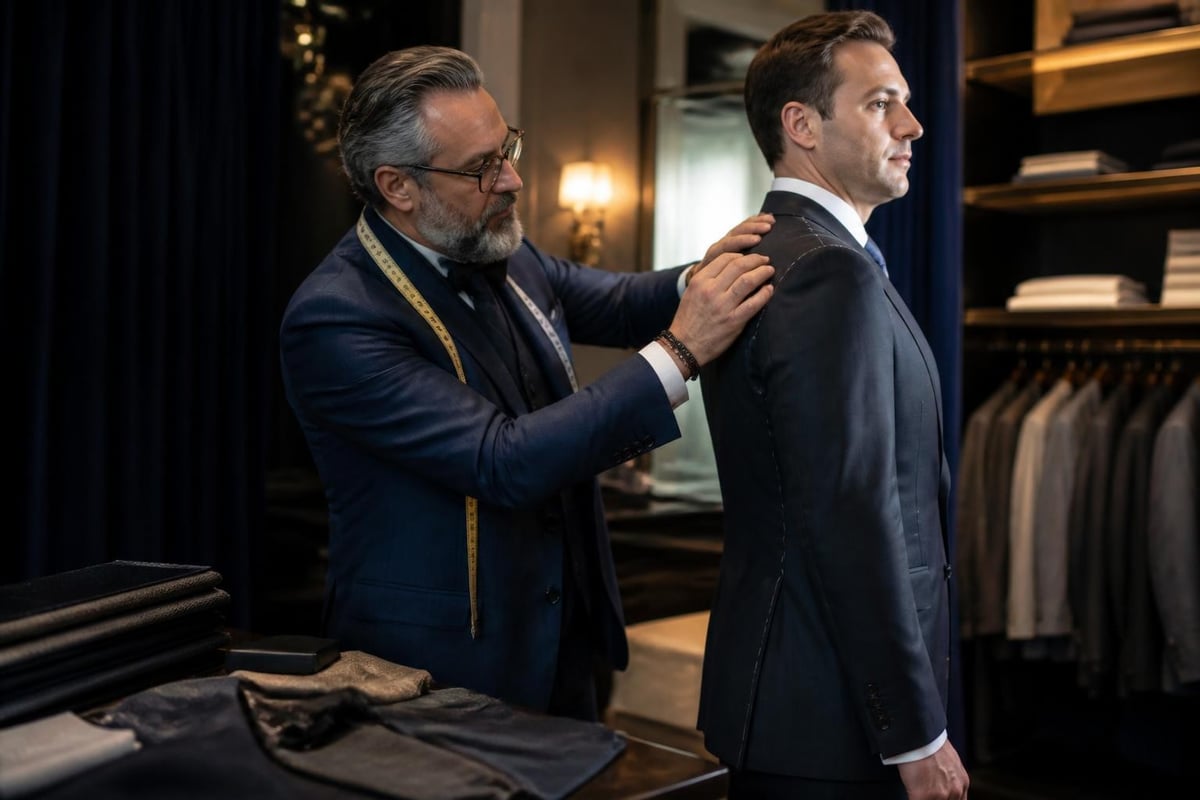
The relationship between client and tailor fundamentally shapes the bespoke experience. Choosing to invest in bespoke suits requires finding a craftsperson whose aesthetic sensibility aligns with personal style preferences while demonstrating technical expertise.
Evaluation Criteria for Tailors
Experience and training provide the foundation for quality work:
- Years in business and apprenticeship background
- Portfolio showcasing diverse styles and body types
- Knowledge of contemporary and classic styles
- Understanding of fabrics and their properties
Process transparency indicates professionalism:
- Clear explanation of construction methods
- Detailed timeline from measurement to delivery
- Number and purpose of fitting sessions
- Policies regarding adjustments and satisfaction
Communication style affects overall experience:
- Willingness to listen to preferences and concerns
- Ability to offer educated guidance without imposing personal taste
- Patience during the selection and fitting process
- Accessibility for questions throughout construction
Established tailors with decades of experience, like those at Alex's Fashion with over 30 years of expertise, bring refined skills and deep fabric knowledge that newer practitioners may lack.
Modern Adaptations in Traditional Tailoring
While bespoke tailoring honors centuries-old techniques, contemporary practices incorporate modern conveniences without compromising quality. Technology enhances certain aspects of the process while preserving the handwork that defines truly bespoke garments.
Technology Meeting Tradition
Digital measurement tools complement traditional tape measurements, capturing data with enhanced precision. Some tailors maintain digital profiles allowing returning clients to reorder with minimal fuss. However, these tools supplement rather than replace the experienced tailor's eye for proportion and fit nuances.
Contemporary fabric development produces materials offering enhanced performance characteristics:
- Wrinkle-resistant wool blends maintain crisp appearance during travel
- Stretch fabrics incorporate elastane for improved comfort and movement
- Moisture-wicking treatments enhance comfort in warm climates
- Stain-resistant finishes protect investment from accidental damage
These innovations prove particularly valuable for professionals who travel frequently or work in demanding environments where traditional fabrics might prove impractical.
Special Occasion and Destination Considerations
Bespoke tailored suits excel for weddings, professional milestones, and significant life events where appearance carries heightened importance. Destination events introduce unique considerations affecting fabric choice, styling, and construction details.
Wedding and Formal Event Suits
Wedding attire for grooms, groomsmen, or guests benefits from bespoke precision. The garment will appear in photographs treasured for generations, making perfect fit and flattering style essential. Coordination with wedding colors, venue formality, and seasonal timing guides fabric and style selections.
For destination weddings in tropical locations, lighter fabrics in breathable weaves maintain comfort during outdoor ceremonies and receptions. Half-canvas construction offers adequate structure while reducing heat retention compared to full-canvas alternatives.
Business Travel and International Wear
Professionals conducting business across climates appreciate bespoke suits designed for versatility. Strategic fabric selection enables a single suit to function across temperature ranges with appropriate layering. Travel-friendly construction details include reinforced stress points and fabrics selected for wrinkle recovery.
Building a core wardrobe of bespoke tailored suits typically begins with versatile foundations:
- Navy suit in medium-weight wool: Universal professional contexts
- Charcoal grey suit: Formal meetings and presentations
- Light grey or tan suit: Warmer weather and less formal business settings
Each subsequent addition expands versatility while reflecting personal style evolution and specific wardrobe needs.
The Bespoke Experience in Thailand
Thailand has earned recognition as a destination for quality tailoring, combining skilled craftsmanship with competitive pricing compared to Western markets. Cities like Bangkok and tourist destinations including Krabi host tailors serving both local clientele and international visitors.
The advantage of establishing relationships with Thailand-based tailors extends beyond initial purchase. Return visits allow for wardrobe expansion with established fit profiles, while many tailors accommodate international clients through shipping and remote consultations.
What Sets Quality Thai Tailors Apart
Reputable establishments demonstrate several distinguishing characteristics:
- Extensive fabric selections from premium international mills
- Experienced tailors trained in traditional techniques
- Transparent processes with multiple fitting opportunities
- Realistic timelines allowing proper construction
- Clear communication regarding expectations and outcomes
Thailand's warm climate has fostered expertise in lightweight suiting appropriate for tropical and subtropical regions worldwide. This specialization proves valuable for clients seeking comfortable professional attire for warm-weather locations.
Building Your Bespoke Wardrobe Strategy
Developing a comprehensive wardrobe of bespoke tailored suits represents a journey rather than a single transaction. Strategic planning ensures each addition enhances overall versatility while maintaining cohesive style.
Wardrobe Planning Approach
Year one priorities establish essential foundations:
- Identify most frequent use scenarios (daily business wear, client meetings, special events)
- Select one versatile suit in navy or charcoal addressing primary needs
- Focus on perfect fit and classic styling ensuring longevity
- Learn personal preferences regarding fabric weight, construction details, and styling
Subsequent expansion builds versatility and personal expression:
- Add suits in complementary colors expanding outfit possibilities
- Experiment with different fabric textures and patterns
- Incorporate seasonal-specific options for climate variations
- Explore formal wear for special occasions
This measured approach distributes investment over time while ensuring each garment receives adequate wear to justify its cost. Quality bespoke suits remain relevant for decades when properly maintained, making patient wardrobe development both practical and economical.
Bespoke tailored suits represent an investment in quality, fit, and personal expression that transcends fast fashion trends. Understanding the process, from fabric selection through multiple fittings, empowers informed decisions that result in garments perfectly suited to individual needs and preferences. Whether you're building a professional wardrobe, preparing for a special occasion, or simply seeking clothing that fits and feels exceptional, the expertise and personalized attention available from experienced tailors make all the difference. With over three decades of craftsmanship and a commitment to client satisfaction, Alex’s Fashion brings world-class tailoring to Ao Nang, creating bespoke suits for men, women, and children that reflect individual style and deliver lasting value.