
 EN
EN  FR
FR  DE
DE  TH
TH 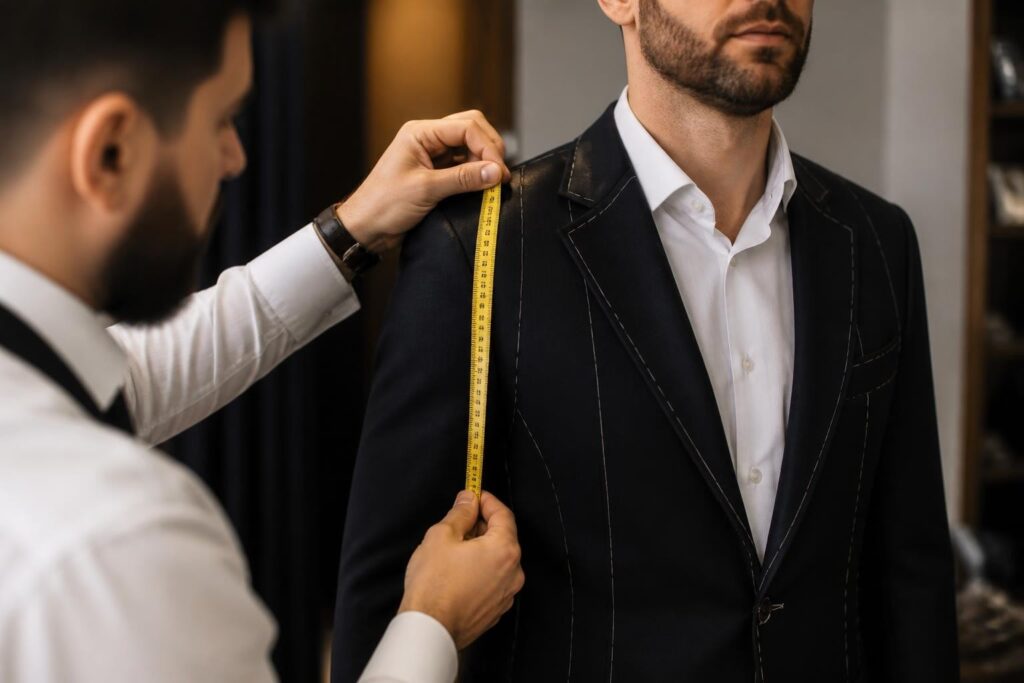
The world of custom tailoring offers multiple pathways to achieving the perfect fit, and made to measure suits represent an increasingly popular middle ground between off-the-rack convenience and fully bespoke luxury. As professionals worldwide recognize the value of well-fitted clothing, understanding what distinguishes made-to-measure from other suiting options has become essential for anyone seeking to elevate their wardrobe. This comprehensive guide explores every aspect of the made-to-measure process, from initial measurements to final fittings, helping you make informed decisions about your next investment in professional attire.
Understanding the Made-to-Measure Process
Made to measure suits begin with a standardized base pattern that is then modified to accommodate your specific measurements and preferences. Unlike ready-to-wear garments that come in fixed sizes, this approach allows for significant customization while maintaining efficiency in production.
The made-to-measure concept relies on extensive measurement databases and proven patterns. Your tailor takes precise measurements of your body, noting everything from chest circumference to shoulder slope, then selects the closest base pattern from their collection. This pattern is adjusted to match your proportions, creating a garment that fits your unique physique.
The Initial Consultation
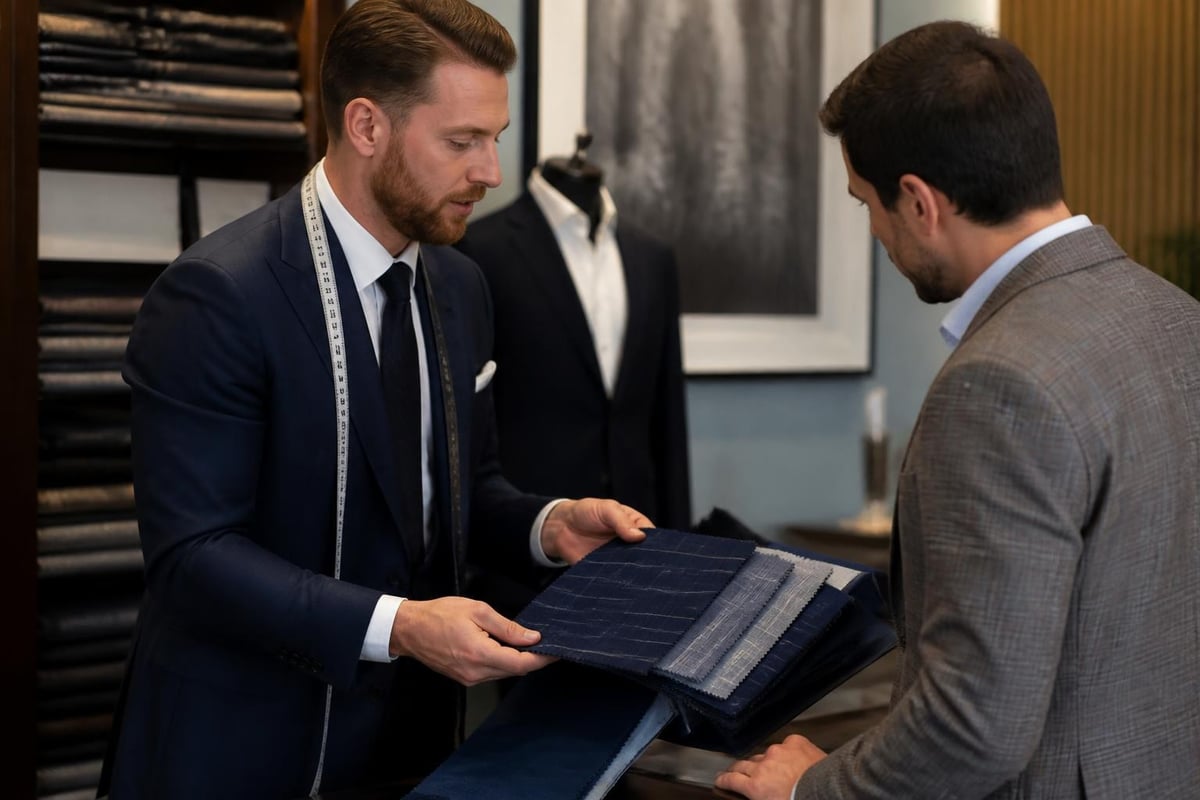
Your first appointment typically involves a detailed discussion about your lifestyle, preferences, and intended use for the suit. Professional tailors ask about:
- Workplace requirements and dress code expectations
- Climate considerations and seasonal wearing patterns
- Style preferences ranging from classic to contemporary
- Specific fit concerns such as athletic build or posture considerations
- Budget parameters and fabric quality expectations
This consultation phase establishes the foundation for your entire experience. Experienced tailors use this time to understand not just your measurements but your personal style philosophy.
Key Differences Between Suiting Options
Understanding where made to measure suits fit within the broader tailoring landscape helps clarify their unique value proposition. The comparison between bespoke, made-to-measure, and off-the-rack options reveals distinct advantages for each approach.
| Feature | Off-the-Rack | Made-to-Measure | Bespoke |
|---|---|---|---|
| Base Pattern | Fixed sizes | Adjusted standard pattern | Completely unique |
| Fittings | None | 1-2 sessions | 3+ sessions |
| Timeline | Immediate | 3-6 weeks | 8-12 weeks |
| Customization | Minimal | Moderate to high | Unlimited |
| Price Range | $300-$800 | $800-$2,500 | $3,000-$10,000+ |
Why Choose Made-to-Measure
The middle position occupied by made-to-measure creates several compelling advantages. You receive significantly better fit than ready-to-wear without committing to the time and expense of fully bespoke tailoring.
Professional environments increasingly demand polished appearances, making the investment in made to measure suits practical for career advancement. The improved shoulder fit, proper sleeve length, and appropriate trouser break create an impression of attention to detail that off-the-rack garments rarely achieve.
Cost efficiency represents another major factor. While bespoke suits involve unique pattern creation and multiple fittings, made-to-measure leverages proven patterns to reduce both time and expense while delivering excellent results.
Fabric Selection and Quality Considerations
The fabric you choose profoundly impacts both the appearance and longevity of your suit. Made to measure suits typically offer access to premium fabrics from renowned mills worldwide, allowing you to select materials that match your specific needs.
Understanding Fabric Weights
Fabric weight, measured in grams per meter or ounces per yard, determines seasonal appropriateness and durability:
- Lightweight (240-280g): Ideal for tropical climates and summer wearing
- Mid-weight (280-330g): Versatile year-round options for moderate climates
- Heavyweight (330-400g): Best for winter and cooler environments
In locations like Ao Nang, Krabi, where temperatures remain warm throughout the year, lighter fabrics in breathable weaves provide optimal comfort without sacrificing professional appearance.
Premium Fabric Mills
World-class fabric producers maintain distinct characteristics that influence both aesthetics and performance. Italian mills such as Vitale Barberis Canonico and Loro Piana offer exceptional quality with beautiful drape and durability. British mills like Scabal and Holland & Sherry provide traditional patterns with robust construction ideal for frequent wear.
The made-to-measure process typically includes reviewing fabric swatches in person, allowing you to assess texture, color, and pattern under various lighting conditions before making final selections.
Measurement and Fitting Sessions
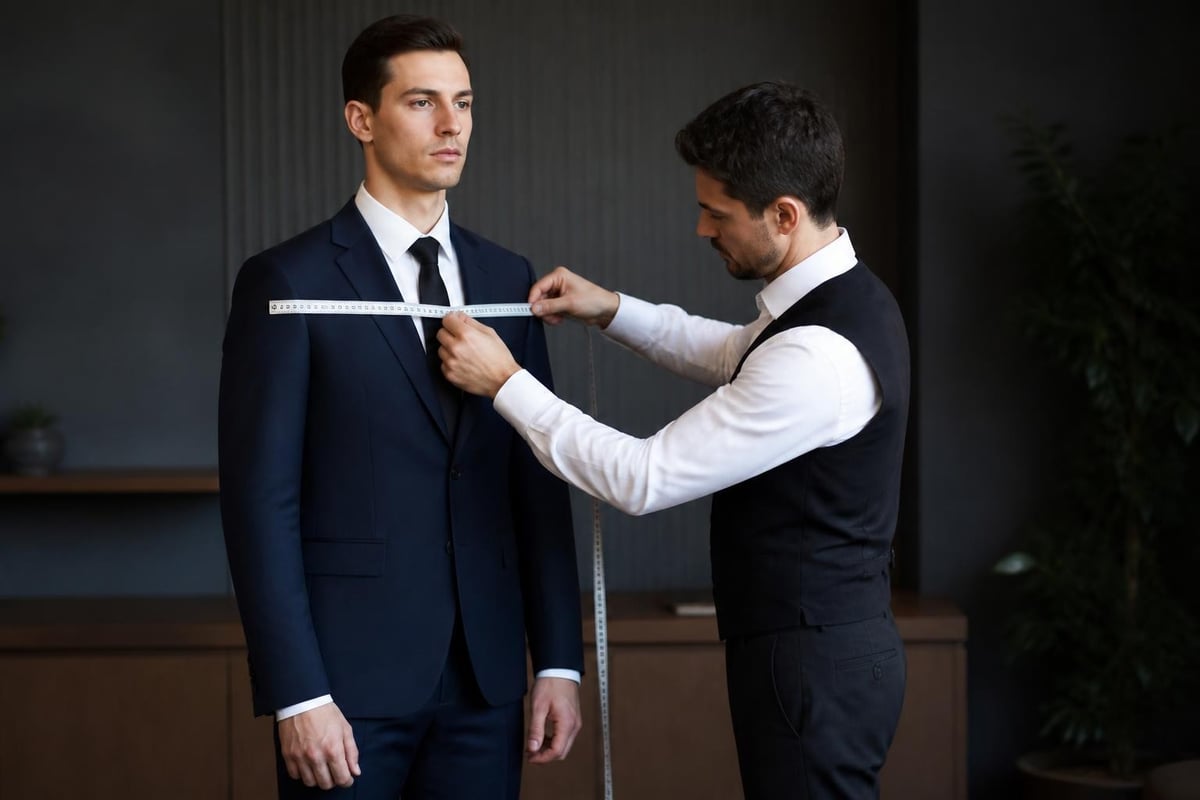
Precision in measurement separates adequate fit from exceptional fit. Professional tailors take dozens of measurements to ensure every aspect of your suit aligns with your body's proportions.
Critical Measurement Points
Your tailor captures measurements across multiple body zones:
- Upper body: Chest at fullest point, across shoulders, neck circumference
- Arms: Shoulder to wrist, bicep circumference, wrist width
- Torso: Natural waist, stomach at fullest point, hip measurement
- Lower body: Inseam, outseam, thigh circumference, knee to floor
- Posture adjustments: Forward shoulder slope, one shoulder higher than other
The Fitting Process
Most made to measure suits require one or two fitting sessions. The first fitting occurs when the garment is approximately 80% complete, allowing for substantial adjustments before final construction.
During this session, your tailor assesses:
- Shoulder alignment and jacket balance
- Sleeve length and armhole comfort
- Chest room and button closure
- Trouser waist positioning and leg break
- Overall proportions and silhouette
Second fittings address minor refinements, ensuring every detail meets your expectations before the suit is finished and pressed for delivery.
Customization Options and Style Choices
Beyond fit adjustments, made to measure suits offer extensive personalization through style selections. These choices allow you to create garments that reflect your personality while maintaining appropriate formality for your context.
Jacket Style Elements
Lapel configurations range from notch lapels for business settings to peak lapels for more formal occasions, with width variations that complement different face shapes and body types. Narrow lapels create contemporary looks while wider options provide classic elegance.
Button configurations typically include single-breasted options with one, two, or three buttons, plus double-breasted styles for distinctive formal appearances. The button stance affects how the jacket drapes and where visual emphasis falls.
Pocket styles include flap pockets for versatility, patch pockets for casual styling, or jetted pockets for formal elegance. These functional elements contribute significantly to overall aesthetic impact.
Trouser Customization
Trouser details deserve equal attention to jacket specifications:
- Pleats or flat front: Pleated fronts offer traditional styling and extra room, while flat fronts create sleeker, modern silhouettes
- Cuff or plain hem: Cuffed trousers add weight and visual interest, plain hems appear more streamlined
- Pocket configurations: Side pockets, back pockets with or without buttons, optional ticket pocket
- Waistband construction: Traditional with belt loops, side adjusters, or suspender buttons
Investment Value and Long-Term Benefits
The cost-effective entry into custom suiting that made-to-measure provides extends beyond initial purchase price. When properly maintained, quality suits deliver years of reliable service, making the per-wear cost remarkably reasonable.
Cost Analysis Over Time
Consider a made-to-measure suit priced at $1,500 worn twice monthly for five years. This equals 120 wearings, resulting in approximately $12.50 per wear. Compare this to purchasing three $500 off-the-rack suits over the same period, with inferior fit and shorter lifespan, and the value proposition becomes clear.
| Scenario | Initial Cost | Lifespan | Wearings | Cost Per Wear |
|---|---|---|---|---|
| Made-to-Measure | $1,500 | 5+ years | 120+ | $12.50 |
| Off-the-Rack (3 suits) | $1,500 total | 2 years each | 72 total | $20.83 |
Professional Impact
Well-fitted clothing influences how others perceive your competence and attention to detail. The confidence that comes from knowing your suit fits perfectly translates into stronger professional presence during important meetings, presentations, and networking events.
Made to measure suits eliminate common fit issues like pulling across the shoulders, excess fabric bunching at the waist, or awkward sleeve lengths that undermine otherwise professional appearances.
Care and Maintenance for Longevity
Protecting your investment requires understanding proper garment care. Made to measure suits constructed from quality fabrics respond well to appropriate maintenance routines, extending their useful life significantly.
Daily Practices
After each wearing, allow your suit to rest on proper wooden hangers with shaped shoulders. This prevents fabric stress and helps the garment recover its natural shape. Brush the fabric gently with a clothes brush to remove surface dust and lint before storing.
Rotation is essential. Wearing the same suit daily accelerates wear, while alternating between multiple suits allows fabrics to breathe and recover between wearings. Ideally, rest suits for at least 48 hours between uses.
Professional Cleaning
Dry clean made to measure suits sparingly, typically no more than three to four times annually for regular business wear. Excessive cleaning breaks down fabric fibers and reduces garment lifespan.
For minor refreshing between cleanings:
- Steam gently to remove wrinkles and odors
- Spot-clean small stains immediately with appropriate solutions
- Air garments outdoors in shade to naturally refresh fabrics
- Store with cedar blocks to prevent moth damage
Selecting the Right Tailor
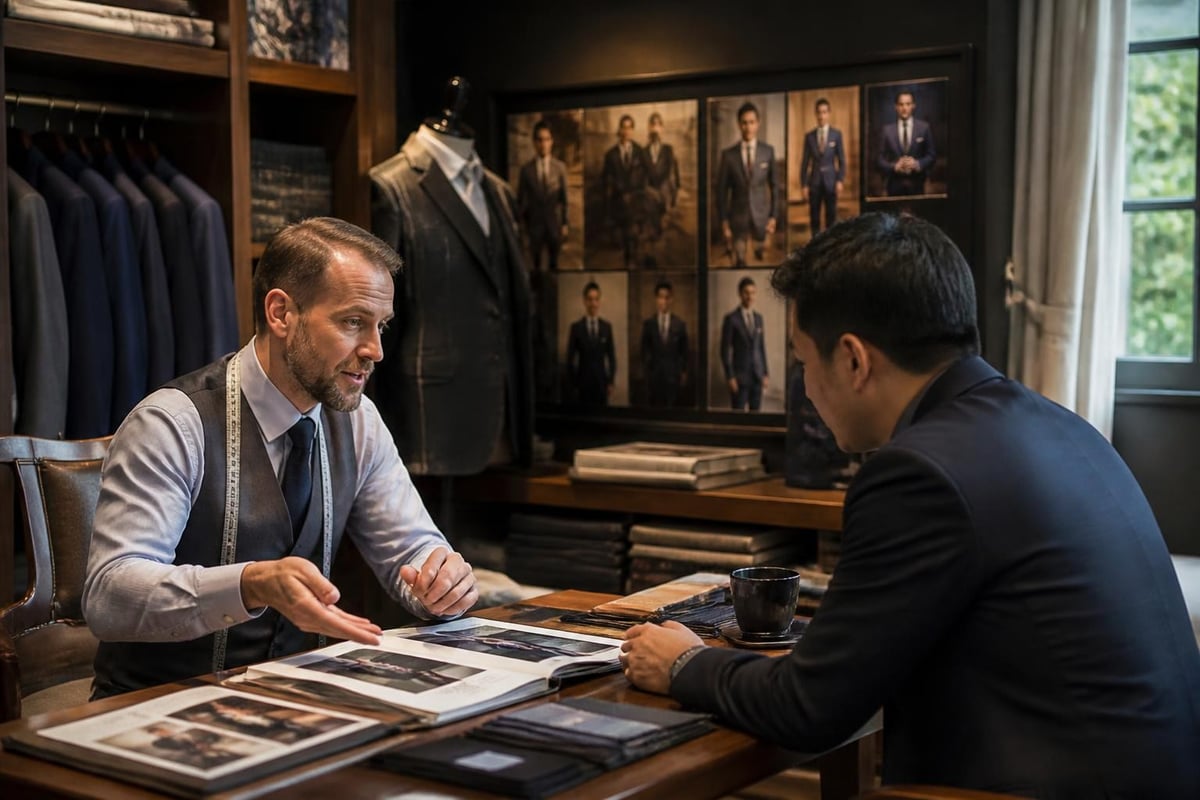
Your experience with made to measure suits depends heavily on the skill and expertise of your chosen tailor. Evaluating potential tailoring partners requires attention to several key factors.
Credentials and Experience
Look for tailors with substantial experience, ideally spanning decades rather than years. Established businesses demonstrate consistent quality and customer satisfaction. Alex’s Fashion exemplifies this standard with over 30 years of expertise in bespoke tailoring.
Portfolio review provides insight into style range and construction quality. Request to see examples of completed work, paying attention to details like buttonhole execution, pattern matching at seams, and overall finishing quality.
Consultation Quality
Initial consultations reveal much about working relationships. Professional tailors listen carefully to your needs, ask relevant questions about lifestyle and preferences, and offer informed recommendations without pressure.
Red flags include:
- Rushing through measurement processes
- Limited fabric selection or poor quality swatches
- Inability to explain construction methods or timeline
- Absence of fitting sessions in the process
- Vague pricing or hidden additional costs
Location and Accessibility
While destination tailoring has gained popularity, consider practical logistics. Multiple fittings require convenient access, particularly if adjustments become necessary. Tailors in tourist-friendly locations like Ao Nang, Krabi often accommodate international clients with efficient scheduling and shipping options for those visiting temporarily.
Modern Trends in Made-to-Measure Suiting
Contemporary made to measure suits reflect evolving workplace norms and style preferences. Understanding current trends helps ensure your investment remains relevant beyond a single season.
Silhouette Evolution
Modern business suits generally feature slimmer profiles than traditional cuts, with higher armholes, shorter jackets, and narrower trouser legs. However, extreme slim fits have moderated toward more comfortable contemporary cuts that remain stylish without sacrificing ease of movement.
Jacket lengths currently fall at or just below the seat, shorter than traditional lengths but longer than the extreme cropped styles popular in recent years. This balanced proportion flatters most body types while maintaining professional appropriateness.
Color and Pattern Preferences
Navy and charcoal gray remain foundational colors for professional wardrobes, but lighter grays, subtle earth tones, and even burgundy have gained acceptance in many business environments. Pattern options extend beyond traditional pinstripes to include windowpane checks, subtle plaids, and textured solid weaves.
For tropical locations, lighter color palettes in tan, stone, and pale blue provide sophisticated alternatives to dark suits while offering better heat management.
Sustainable Considerations
Increasing awareness of environmental impact has influenced fabric selection and construction methods. Many clients now prioritize:
- Natural fibers over synthetic blends
- Fabrics from mills with sustainable practices
- Construction methods emphasizing durability over disposability
- Local tailors reducing shipping environmental costs
The inherent longevity of quality made to measure suits aligns well with sustainable fashion principles, as one well-made garment replaces multiple lower-quality alternatives.
Special Occasion and Seasonal Variations
While business suits form the core of most made-to-measure wardrobes, understanding specialized applications expands the versatility of this tailoring approach.
Wedding and Formal Events
Made to measure suits excel for special occasions where perfect fit matters most. Wedding suits benefit from the ability to coordinate specific colors with wedding themes while ensuring comfortable wear throughout long celebration days.
Formal events requiring black-tie or white-tie attire can be addressed through made-to-measure dinner jackets and formal trousers, providing superior fit compared to rental options at comparable or lower total cost for those attending multiple formal events.
Climate-Specific Construction
Tropical weight fabrics in loose weaves maximize airflow while maintaining structure necessary for professional appearance. Half-lined or unlined jackets reduce heat retention, and natural fabrics like linen blends offer enhanced breathability.
Conversely, heavier fabrics with full canvas construction provide warmth and wind resistance for cooler climates, demonstrating how made to measure suits adapt to diverse environmental requirements.
Maximizing Your Made-to-Measure Investment
Strategic planning ensures your made to measure suits deliver maximum value and versatility within your wardrobe.
Building a Coordinated Wardrobe
Start with versatile navy or charcoal options that pair with multiple shirts and accessories. Add complementary pieces gradually, creating a cohesive collection rather than isolated garments.
Consider a systematic approach:
- Foundation suit: Navy or charcoal, conservative styling
- Secondary suit: Gray or alternative color, slight style variation
- Seasonal option: Lighter fabric and color for warm weather
- Statement piece: Bolder pattern or color reflecting personal style
Accessory Coordination
Made to measure suits provide the foundation, but accessories complete professional presentations. Invest in quality dress shirts, silk ties, leather shoes, and belts that complement your suits' colors and formality levels.
Pocket squares, cufflinks, and tie bars offer opportunities for personality expression within professional constraints, transforming the same suit into multiple distinct outfits through thoughtful accessory rotation.
Made to measure suits represent an exceptional balance of fit, quality, and value for professionals seeking to elevate their wardrobes without the extreme investment of fully bespoke tailoring. Whether you're building your first professional wardrobe or upgrading from ready-to-wear options, the personalized fit and extensive customization available through this approach deliver tangible benefits in both appearance and confidence. With over three decades of expertise in creating perfectly fitted garments for discerning clients, Alex’s Fashion combines traditional craftsmanship with world-class fabrics to deliver made-to-measure suits that exceed expectations and stand the test of time.