
 EN
EN  FR
FR  DE
DE  TH
TH 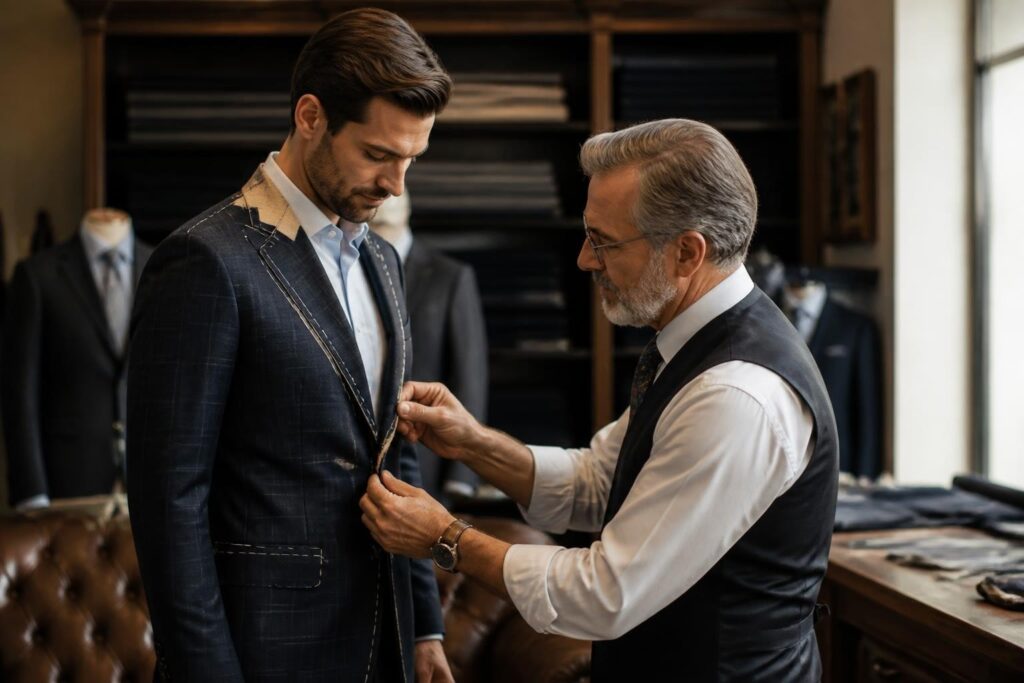
Finding great tailors near me has become an essential search for anyone seeking perfectly fitted clothing that reflects personal style and professional standards. The right tailor transforms ordinary garments into extraordinary pieces that enhance your appearance and confidence. Whether you need alterations for an existing wardrobe or want to invest in bespoke pieces crafted from scratch, understanding what separates exceptional tailors from average ones ensures your investment delivers maximum value. In Thailand's vibrant tailoring scene, particularly in destinations like Krabi, discerning customers have access to skilled artisans who combine traditional techniques with modern sensibilities to create clothing that fits flawlessly.
Understanding Quality Tailoring Standards
When searching for great tailors near me, recognizing quality craftsmanship becomes paramount. Professional tailors demonstrate specific skills that distinguish their work from mass-produced alternatives. Precision in measurements forms the foundation of excellent tailoring, as even minor discrepancies of a quarter-inch can dramatically affect how a garment drapes and feels.
Master tailors possess comprehensive knowledge of fabrics, understanding how different materials behave during cutting, sewing, and wearing. This expertise guides fabric selection recommendations that align with your intended use, climate considerations, and personal preferences. The skills and ability of quality custom tailors include advanced hand-sewing techniques for finishing details that machines cannot replicate.
Evaluating Workmanship Details
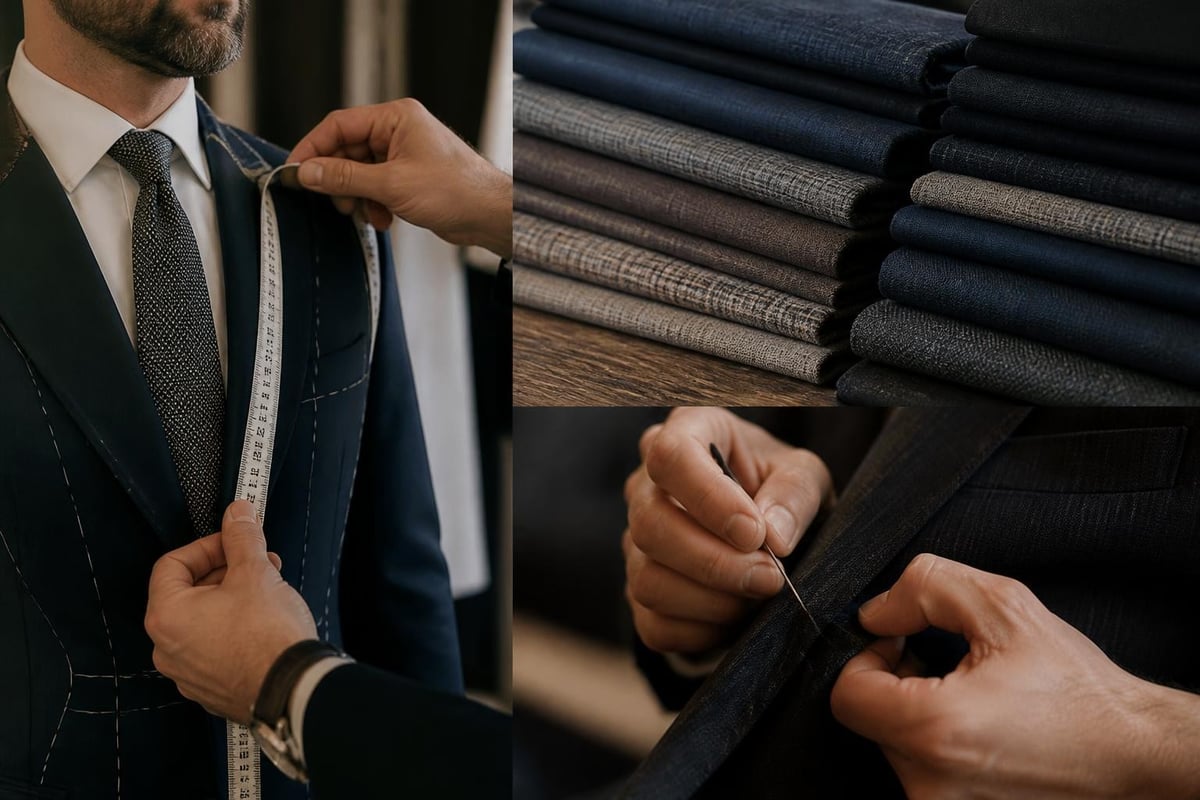
Superior tailoring reveals itself through specific construction elements. Examine how seams align, particularly at pattern intersections where stripes or checks meet. Quality work shows perfect pattern matching that demonstrates attention to detail and fabric efficiency.
Key indicators of excellent craftsmanship include:
- Hand-stitched buttonholes with consistent spacing and tension
- Floating canvas construction in suit jackets rather than fused interfacing
- Clean, flat seams without puckering or bunching
- Properly set sleeves that hang smoothly without twisting
- Lining that lies flat without pulling or bubbling
Button placement deserves scrutiny as well. Buttons should align precisely with corresponding buttonholes, creating a smooth closure without gapping. The collar should hug the neck comfortably without standing away or choking.
How to Research Great Tailors Near Me
Your search for great tailors near me benefits from systematic research combining multiple sources. Personal recommendations from well-dressed colleagues, friends, or family members provide valuable firsthand insights. Pay attention to people whose style you admire and inquire about their tailoring sources.
Online reviews offer broader perspectives, though interpreting them requires discernment. Look for consistent themes across multiple reviews rather than focusing on isolated complaints or praise. What to know before going to a tailor includes understanding how to evaluate online feedback effectively.
| Research Method | Advantages | Limitations |
|---|---|---|
| Personal referrals | Trusted source, detailed feedback | Limited to network contacts |
| Online reviews | Broad perspectives, recent feedback | May include unreliable sources |
| Portfolio viewing | Visual quality assessment | Doesn't reveal fit or comfort |
| Initial consultation | Direct interaction, question answers | Time investment required |
Social media platforms showcase tailors' work through photos and client testimonials. Instagram and Facebook galleries reveal style range and finishing quality, though remember that lighting and photography can enhance appearances.
Initial Consultation Importance
Scheduling consultations with prospective tailors provides essential information. During these meetings, assess communication clarity and whether the tailor listens attentively to your requirements. Questions to ask before choosing a bespoke tailor help structure productive conversations.
Professional tailors explain their process transparently, including timeframes, fitting schedules, and alteration policies. They should demonstrate fabric knowledge by discussing options that suit your needs rather than pushing their most expensive inventory.
What to Expect During Your First Visit
Walking into a tailoring establishment for the first time can feel overwhelming. Understanding the standard process helps you prepare mentally and practically for productive sessions. Great tailors near me prioritize client comfort while gathering necessary information to deliver exceptional results.
The initial discussion typically covers your clothing needs, preferred styles, and specific requirements. Bring reference images showing styles you admire, as visual examples communicate preferences more effectively than verbal descriptions alone. Getting tailor shop guidance explains typical first-visit experiences.
Measurement Process Explained
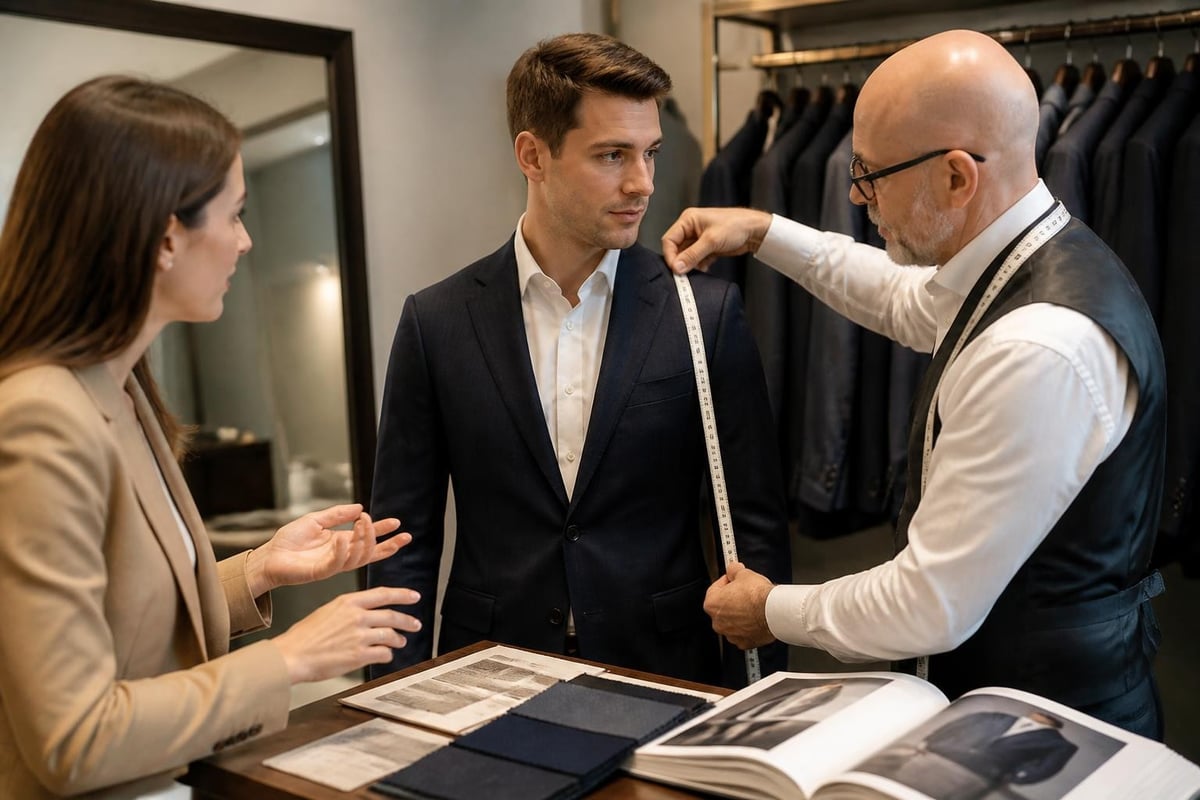
Professional measuring takes approximately 20-30 minutes for a complete suit and involves far more than simple chest and waist numbers. Tailors record numerous measurements including shoulder width, sleeve length from different reference points, rise for trousers, and posture characteristics.
Comprehensive measurements typically include:
- Neck circumference and slope
- Shoulder width and slope angle
- Chest at fullest point
- Waist at natural position
- Hip measurement
- Sleeve length with arm bent
- Inseam and outseam for trousers
- Rise (front and back)
Experienced tailors observe your posture and body asymmetries, which most people have to some degree. One shoulder may sit higher, or your torso may lean slightly. These observations inform adjustments ensuring your finished garment accommodates your unique physique rather than forcing your body into a symmetrical ideal.
Fabric Selection and Style Guidance
Choosing appropriate fabrics represents a critical decision point when working with great tailors near me. The material affects not only appearance but also comfort, durability, and maintenance requirements. Professional tailors stock diverse fabric collections from reputable mills, offering options across various price points.
For tropical climates like Thailand's, lightweight fabrics with breathable weaves provide comfort without sacrificing style. Wool blends, linen, and certain synthetic performance fabrics offer moisture-wicking properties while maintaining professional appearance. Finding a suit for every body type includes fabric considerations that enhance fit and comfort.
Understanding Fabric Characteristics
Different materials serve different purposes. Worsted wool creates crisp business suits with excellent shape retention. Flannel provides warmth and texture for cooler seasons. Linen offers unmatched breathability but wrinkles readily, creating a more casual aesthetic.
| Fabric Type | Best Uses | Care Requirements | Climate Suitability |
|---|---|---|---|
| Worsted wool | Business suits, formal wear | Dry clean, press | Year-round |
| Tropical wool | Lightweight suits | Dry clean | Hot climates |
| Linen | Casual suits, shirts | Wash/dry clean, iron | Hot, humid |
| Cotton | Shirts, casual trousers | Machine wash, iron | All climates |
| Silk blends | Dress shirts, linings | Dry clean | All climates |
Color and pattern selection depends on intended use and existing wardrobe. Navy and charcoal gray suits offer maximum versatility for business contexts. Lighter colors and bolder patterns work well for social occasions or when building beyond foundational pieces.
The Fitting Process and Timeline
Understanding the fitting schedule helps you plan appropriately when working with great tailors near me. Bespoke tailoring typically involves multiple fittings, each serving specific purposes in the construction process. The number of fittings varies based on garment complexity and how closely initial measurements predict your final fit.
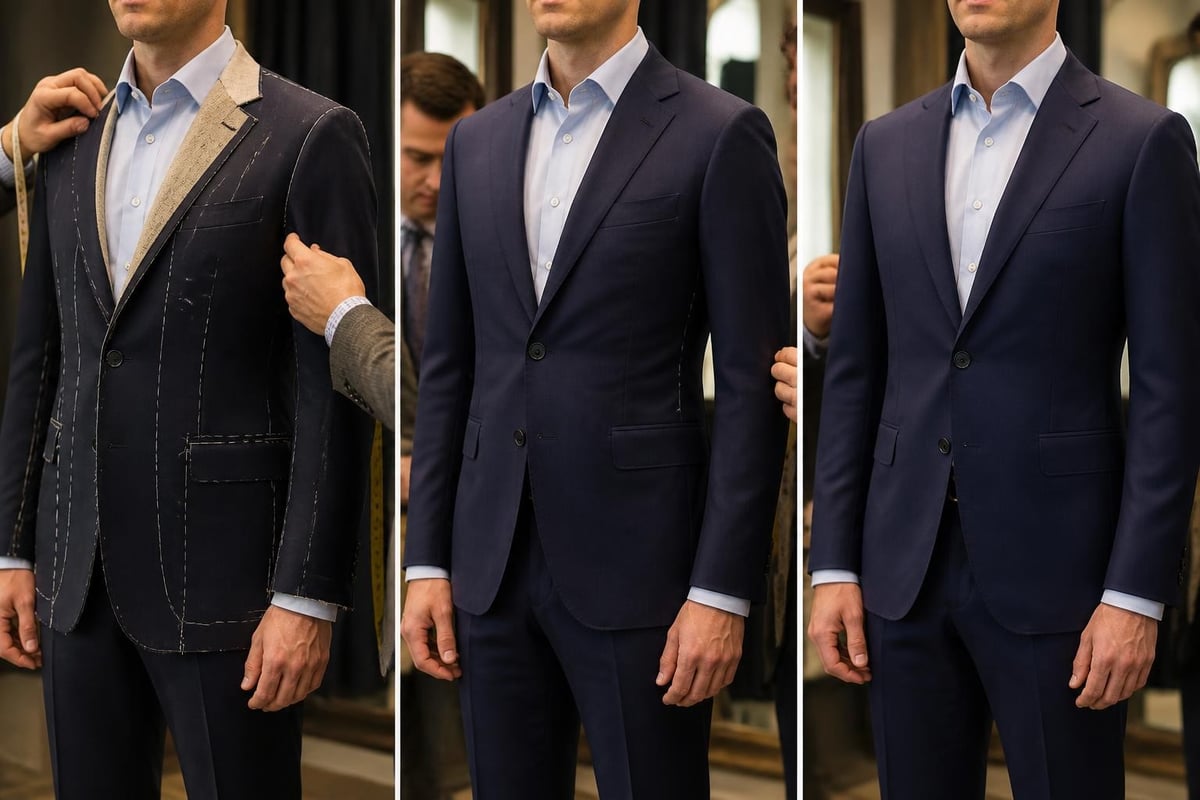
First fittings occur with garments in preliminary form, often basted together rather than permanently sewn. This allows tailors to assess overall proportions and make significant adjustments before committing to final construction. You'll evaluate shoulder fit, sleeve length, jacket length, and trouser rise.
Between Fittings Expectations
Professional tailors require time between fittings to implement adjustments carefully. Rushing this process compromises quality, as precision work cannot be hurried. Typical timelines span two to four weeks for shirts and three to six weeks for suits, though complex projects may require longer periods.
Standard bespoke timeline progression:
- Initial consultation and measuring (Day 1)
- Fabric selection and order confirmation (Day 1-3)
- First fitting with basted garment (Week 2-3)
- Second fitting with refined construction (Week 3-4)
- Final fitting and minor adjustments (Week 4-6)
- Delivery of completed garment (Week 5-6)
Communication between fittings matters significantly. Reputable tailors welcome questions and provide updates on project progress. They should also accommodate schedule adjustments if you need to reschedule fittings due to travel or other commitments.
Evaluating Cost and Value
Pricing for great tailors near me varies considerably based on experience, reputation, fabric quality, and construction methods. Understanding what influences cost helps you evaluate whether pricing aligns with value delivered. The cheapest option rarely provides the best long-term value, while the most expensive doesn't automatically guarantee superior quality.
Bespoke tailoring represents a significant investment, particularly for suits. However, properly constructed garments last years or even decades with appropriate care, making the cost-per-wear favorable compared to ready-made alternatives requiring frequent replacement. Finding a great tailor involves balancing quality expectations with budget realities.
Breaking Down Pricing Components
Several factors contribute to final pricing. Fabric costs represent a substantial portion, with premium materials commanding higher prices. Construction time also influences pricing, as hand-finishing techniques require significantly more labor than machine work. The tailor's experience and reputation affect rates as well, reflecting years of skill development.
Typical price ranges for bespoke items:
- Custom dress shirts: $80-$300 per shirt
- Made-to-measure trousers: $150-$400 per pair
- Bespoke suits: $800-$4,000+ depending on fabric and construction
- Alterations: $15-$100 depending on complexity
Request detailed quotes specifying exactly what's included. Some tailors bundle multiple fittings and minor adjustments within quoted prices, while others charge separately for additional services. Understanding these distinctions prevents surprise costs.
Maintaining Relationships with Your Tailor
Establishing ongoing relationships with great tailors near me provides multiple benefits beyond individual projects. Tailors who know your measurements, preferences, and lifestyle create subsequent garments more efficiently. They understand which adjustments your body requires and which styles complement your physique best.
Regular clients often receive priority scheduling, particularly during busy seasons. This proves valuable when you need quick turnarounds for special occasions or business needs. Long-term relationships also facilitate honest feedback, as established tailors feel comfortable suggesting alternatives when your initial ideas might not serve you well.
Communication Best Practices
Clear communication prevents misunderstandings and ensures satisfaction. Express your preferences specifically rather than assuming the tailor shares your vision. If you want conservative styling, explain what that means to you rather than using vague terms open to interpretation.
Provide feedback during fittings honestly but respectfully. Professional tailors appreciate knowing when something feels uncomfortable or looks incorrect. Finding a good tailor includes developing effective communication patterns that support successful outcomes.
Respect your tailor's time by arriving punctually for appointments and providing adequate notice for cancellations. These courtesies strengthen professional relationships and often result in reciprocal flexibility when you need accommodation.
Specialty Services and Customization Options
Beyond standard tailoring, many great tailors near me offer specialized services that enhance wardrobe functionality and style. Understanding available options helps you maximize your tailoring relationship's value. Custom embroidery adds personalization to shirts, jackets, or accessories. Monogramming on cuffs or chest provides subtle distinction.
Working buttons on sleeves (functional sleeve buttons or surgeon's cuffs) represent a hallmark of quality construction that allows you to roll sleeves properly. This detail costs more due to additional labor but signals genuine custom work rather than altered ready-to-wear.
Advanced Construction Features
Certain construction elements elevate garments from good to exceptional. Hand-padded lapels create dimensional shape that drapes naturally rather than lying flat against the chest. Pick stitching along lapel edges provides subtle texture and traditional aesthetic.
Working button holes require precise hand work but allow you to adjust waist suppression by opening or closing the bottom jacket button. Multiple jacket pockets serve functional purposes, with inside pockets for phones, tickets, or documents.
For those visiting Alex’s Fashion, the team's three decades of experience enable them to execute these refined details with precision. Their comprehensive service approach accommodates requests ranging from fundamental alterations to completely bespoke creations for men, women, and children.
Red Flags to Watch For
Identifying warning signs helps you avoid subpar tailors and disappointing experiences. Certain behaviors or conditions indicate problems that typically result in unsatisfactory outcomes. Pressure to commit immediately without reviewing fabric samples or discussing options thoroughly suggests prioritizing sales over service quality.
Inability or unwillingness to provide references or show previous work raises concerns about quality or customer satisfaction. Reputable tailors maintain portfolios and welcome inquiries from potential clients. Vague timelines or repeatedly missed deadlines indicate organizational problems or overcommitment that compromise attention to your project.
Warning signs requiring caution:
- Reluctance to explain construction methods or process steps
- Limited fabric selection with no access to additional sources
- Inability to articulate style recommendations based on your body type
- Dismissive responses to your questions or concerns
- Significantly lower pricing than established competitors without clear explanation
- Poor workshop conditions with inadequate lighting or organization
Trust your instincts during initial consultations. If communication feels difficult or the tailor seems disinterested in your specific needs, continue your search. Great tailors near me demonstrate genuine interest in creating garments that exceed your expectations.
Finding exceptional tailoring transforms your wardrobe by ensuring every garment fits your body perfectly and reflects your personal style. The investment in quality custom clothing pays dividends through years of wear, enhanced appearance, and increased confidence. Whether you need alterations to existing pieces or want to commission entirely bespoke garments, Alex’s Fashion in Ao Nang brings over 30 years of expertise to every project, crafting tailor-made clothing for the entire family using world-class fabrics and meticulous attention to detail. Visit their studio to experience the difference that genuine craftsmanship and personalized service make in your wardrobe.