
 FR
FR  EN
EN  DE
DE  TH
TH 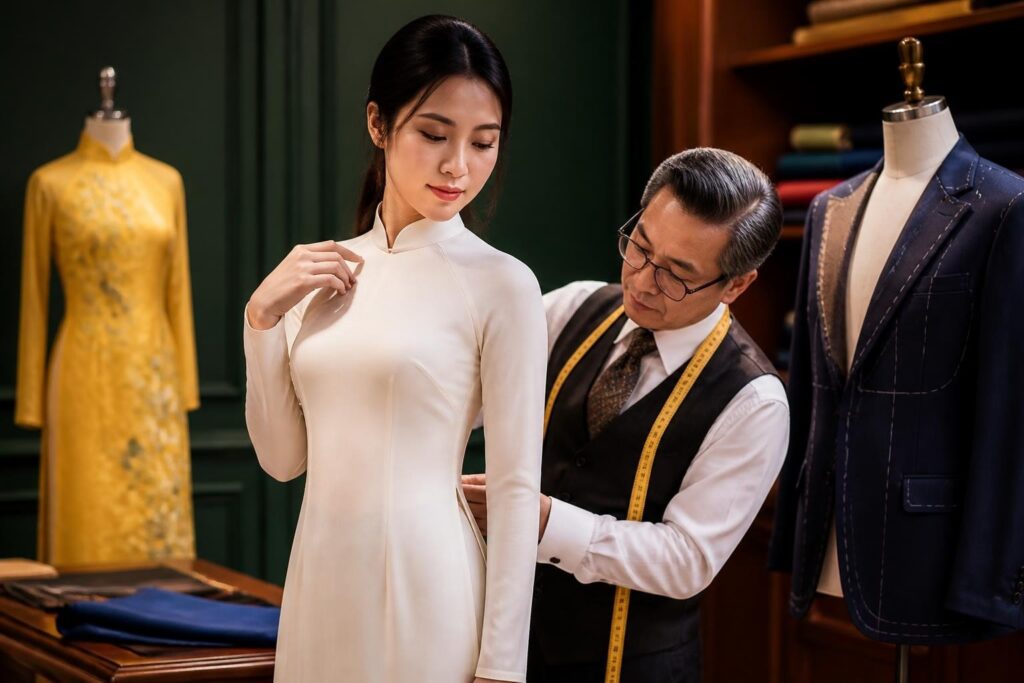
The art of bespoke tailoring has flourished across Southeast Asia for centuries, with Vietnam establishing itself as a premier destination for custom-made clothing. Whether you're seeking a perfectly fitted suit, a traditional Ao Dai, or contemporary casual wear, understanding the vietnam tailor tradition offers valuable insights into quality craftsmanship, cultural heritage, and the personalized service that defines this industry. From the historic streets of Hoi An to modern tailoring establishments throughout the region, the principles of precision, fabric selection, and customer-focused service remain constant across all exceptional bespoke tailoring operations.
The Cultural Heritage Behind Vietnam Tailor Excellence
Vietnamese tailoring represents more than just a trade-it embodies centuries of cultural evolution and artistic expression. The vietnam tailor tradition traces its roots to both indigenous craftsmanship and French colonial influences that introduced European tailoring techniques in the early 20th century. This unique blend created a distinctive approach to garment construction that balances Eastern aesthetics with Western precision.
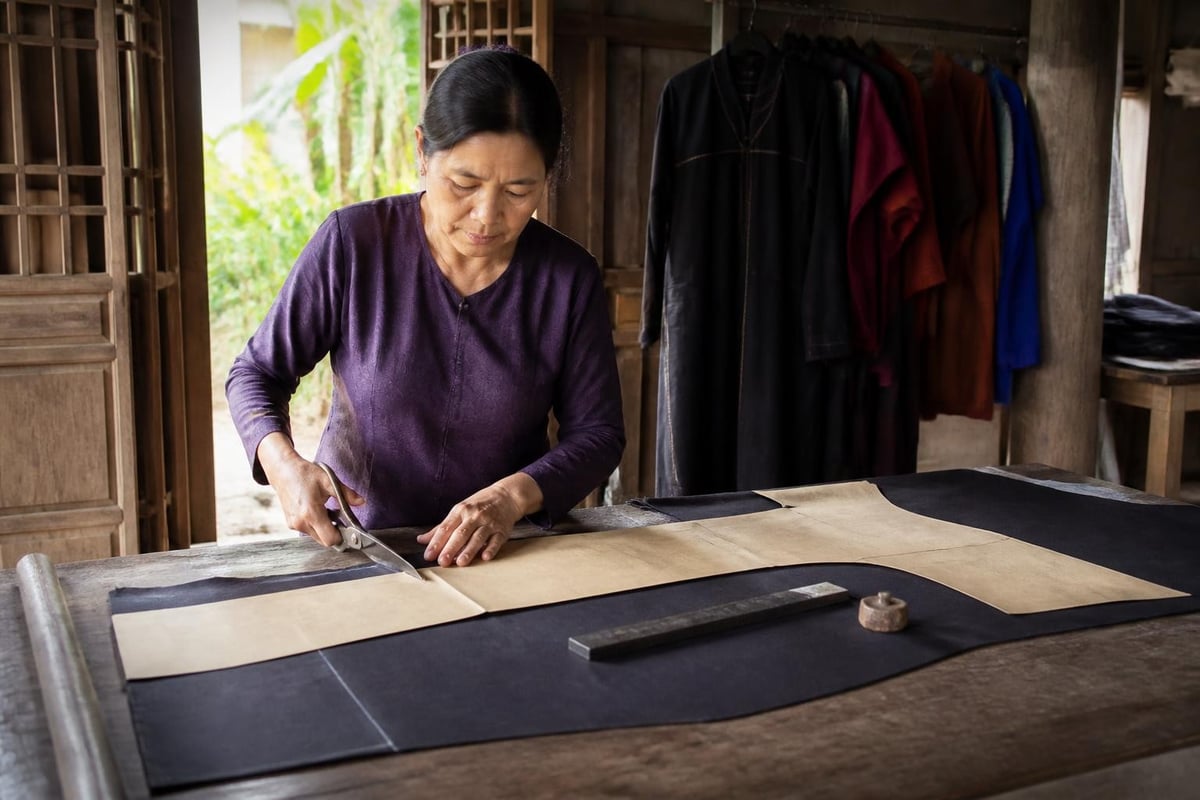
Traditional Vietnam tailoring village weaves cultural heritage into economic growth, with communities like Trach Xa village maintaining time-honored techniques passed down through generations. These villages have earned recognition as national intangible cultural heritage sites, preserving methods that inform modern bespoke tailoring practices throughout Southeast Asia.
Traditional Techniques Meet Modern Innovation
The evolution of vietnam tailor craftsmanship demonstrates how traditional skills adapt to contemporary fashion demands. Master tailors combine hand-stitching techniques with modern pattern-making software, creating garments that honor heritage while meeting current style expectations.
Key techniques preserved in Vietnamese tailoring:
- Hand-basted fittings for precise adjustments
- Natural shoulder construction without excessive padding
- Floating canvas chest pieces for superior drape
- Hand-finished buttonholes and edge stitching
- Custom pattern development from individual measurements
Contemporary bespoke tailoring businesses draw upon these foundational skills, applying them to diverse garment types from business suits to casual wear. The attention to detail characteristic of vietnam tailor traditions translates seamlessly to any custom clothing project, regardless of style or formality.
Why Hoi An Became a Global Tailoring Destination
Hoi An's reputation as a tailoring capital extends far beyond Vietnam's borders. Hoi An’s needle and thread traditions have transformed this ancient town into the world's tailoring capital, where hundreds of shops produce custom garments with remarkable speed and quality. The vietnam tailor shops in Hoi An can complete full suits within 24 to 48 hours, a feat that combines efficient workflow systems with skilled craftsmanship.
| Fonctionnalité | Hoi An Tailoring | Traditional Western Tailoring |
|---|---|---|
| Délai d'exécution | 24-48 hours | 4-8 weeks |
| Fittings | 2-3 sessions | 2-4 sessions |
| Price Point | Modéré | Premium |
| Sélection des tissus | Très large | Variable |
| Cultural Experience | Integrated | Separate |
The Rapid Production Model
The efficiency of vietnam tailor establishments in Hoi An stems from specialized workshop organization. Each tailor focuses on specific garment components, creating an assembly line approach that maintains quality while accelerating production. Pattern makers, cutters, seamsters, and finishers work in coordinated teams, ensuring consistent results across multiple garments simultaneously.
This model offers valuable lessons for any bespoke tailoring operation. While most businesses cannot match Hoi An's 24-hour turnaround, the principles of workflow optimization, skilled specialization, and quality control checkpoints apply universally to custom clothing production.
Understanding Vietnam Tailor Fabric Selection
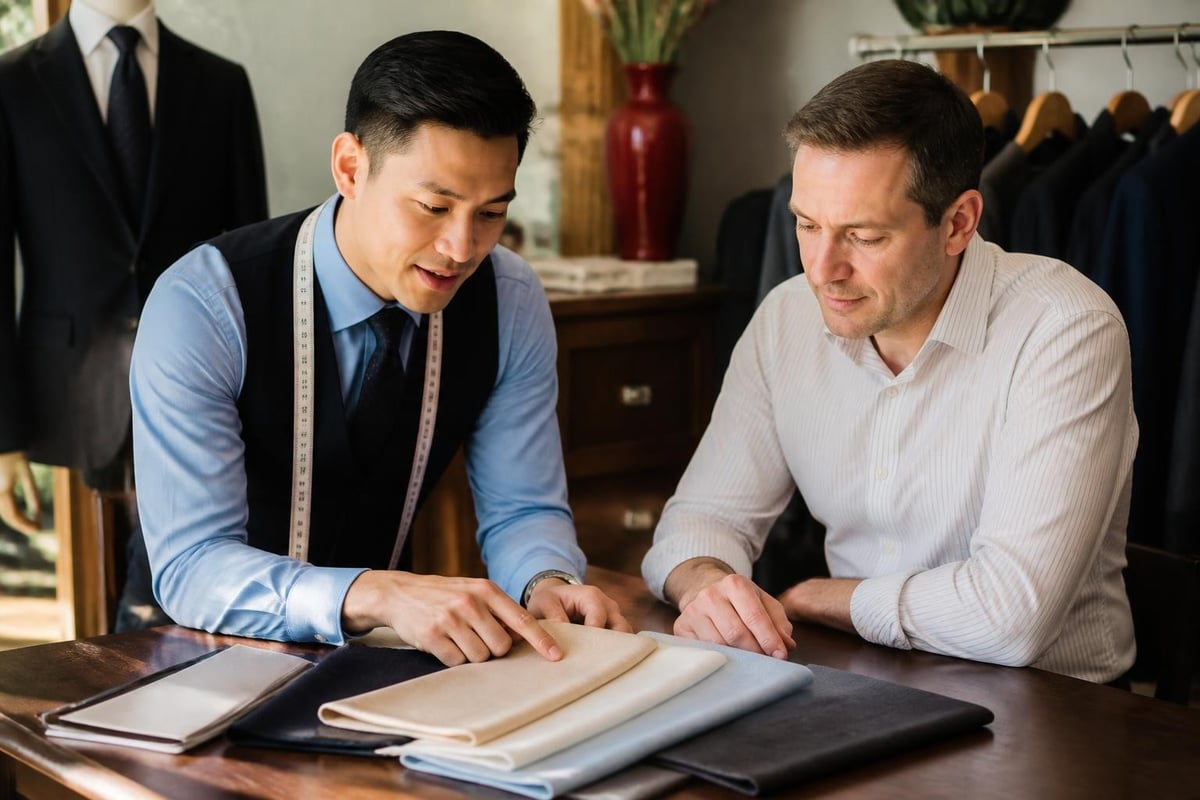
Fabric quality separates exceptional custom garments from mediocre ones. Vietnam tailor expertise includes deep knowledge of textile characteristics, helping clients select materials appropriate for climate, occasion, and personal preference. Southeast Asian tailors particularly excel at recommending breathable fabrics suited to tropical environments while maintaining formal appearance standards.
Popular fabric categories in Vietnamese tailoring:
- Tropical weight wools (7-9 oz): Breathable yet structured
- Linen blends: Natural cooling with reduced wrinkling
- Cotton-silk combinations: Luxurious drape with durability
- Performance fabrics: Modern synthetics offering wrinkle resistance
- Traditional silk: Premium option for special occasions
The relationship between fabric selection and garment construction requires expertise that vietnam tailor professionals develop over years of practice. Understanding how different materials behave during cutting, sewing, and wearing allows tailors to recommend optimal choices for each client's specific needs and lifestyle.
The Art of Measurement and Fitting
Precision measurement forms the foundation of all successful bespoke tailoring. A vietnam tailor typically takes 15-20 detailed measurements for a jacket and similar numbers for trousers, capturing not just dimensions but also posture, shoulder slope, and body asymmetries. This comprehensive approach ensures garments fit the individual rather than forcing the body to conform to standard sizing.
Critical Measurement Points
Professional tailors record measurements that standard retail sizing ignores entirely. Shoulder slope angle, back length from neck to waist, and the relationship between chest and waist measurements all influence pattern development. Vietnam tailor expertise recognizes that bodies vary significantly, requiring custom adjustments that mass-produced clothing cannot accommodate.
Essential measurements for suit construction:
- Chest circumference at fullest point
- Natural waist (not trouser waist)
- Shoulder width across back
- Sleeve length from shoulder point to wrist bone
- Back length from prominent neck vertebra to waist
- Hip circumference at fullest point
- Trouser rise (crotch depth)
- Inseam length
- Thigh and knee circumference
- Calf circumference
Multiple fittings allow tailors to refine garments progressively. The first fitting typically occurs with the garment basted together, allowing major adjustments before permanent stitching. Subsequent fittings address minor refinements, ensuring the final product achieves the precise fit that defines quality bespoke tailoring.
Vietnam Tailor Influence on Regional Tailoring Standards
The craftsmanship standards established by vietnam tailor traditions influence bespoke clothing production throughout Southeast Asia. Thailand's tailoring industry, particularly in tourist destinations and urban centers, incorporates techniques and service models refined in Vietnamese workshops. This cross-pollination of expertise elevates regional tailoring standards while maintaining distinct local characteristics.
Bespoke tailoring in Vietnam represents a thread of elegance connecting historical craftsmanship with modern fashion sensibilities. Thai tailoring establishments benefit from this shared knowledge base, adapting vietnam tailor methods to local preferences and clientele expectations.
| Aspect | Vietnam Approach | Thai Adaptation |
|---|---|---|
| Customer Service | Intensive consultation | Relationship-focused |
| Design Aesthetic | Franco-Vietnamese blend | International contemporary |
| Turnaround Options | Express and standard | Horaires flexibles |
| Fabric Sourcing | Local and imported | Premium international |
Selecting the Right Tailor for Your Needs
Whether working with a vietnam tailor or any bespoke clothing professional, certain quality indicators help identify skilled craftspeople. Experience matters significantly-tailors with decades of practice develop intuitive understanding of garment construction that newer practitioners simply cannot match.
Evaluation Criteria
Examine previous work samples closely. Well-constructed garments display clean interior finishing with no loose threads, properly aligned patterns at seams, and smooth shoulder lines without puckering. Button placement should be precise and consistent, while hand-stitching demonstrates even, tight stitches that will endure years of wear.
Questions to ask potential tailors:
- How many years have you practiced bespoke tailoring?
- How many fittings do you include in the process?
- What fabric suppliers do you work with?
- Can you show examples of similar garments you've completed?
- What alterations are included after final delivery?
- Do you construct garments in-house or outsource production?
- What is your typical timeline from measurement to delivery?
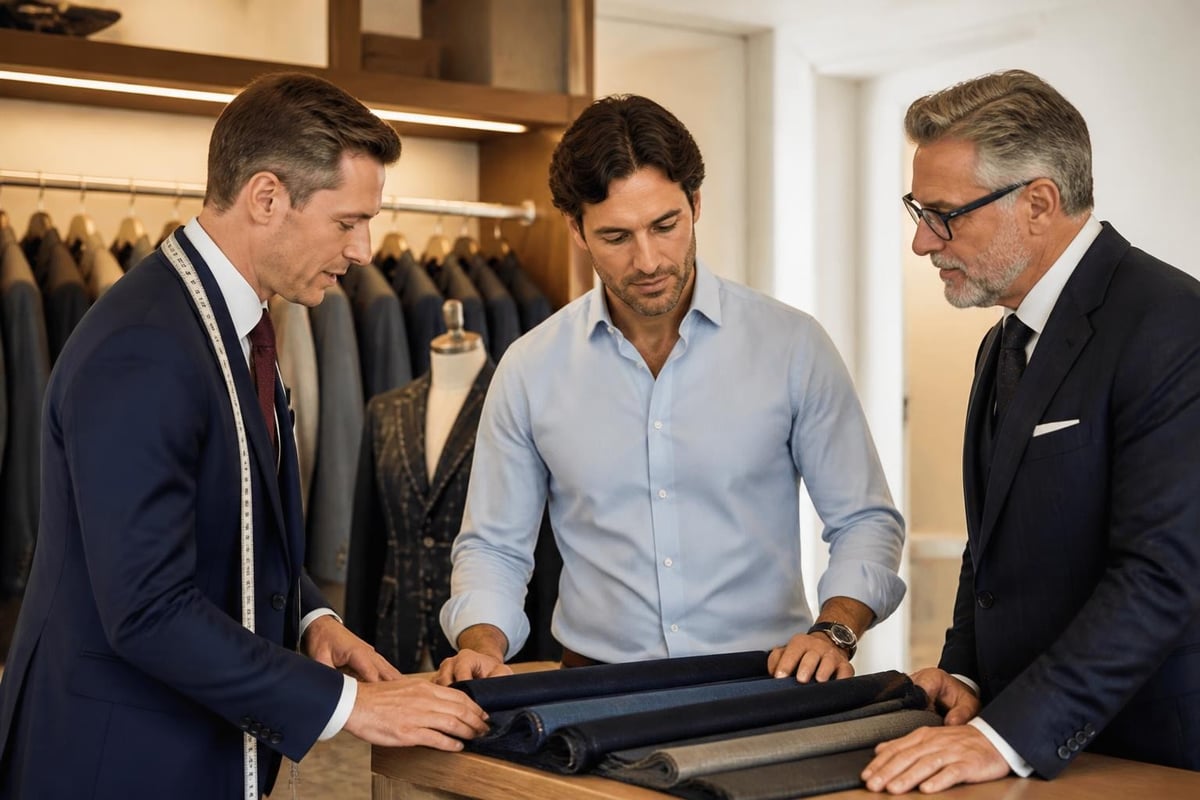
Communication style also indicates service quality. Exceptional tailors listen carefully to client preferences, offer honest recommendations, and explain technical decisions clearly. They balance respecting client wishes with providing expert guidance, helping customers make informed choices about style, fabric, and construction details.
The Economic Impact of Tailoring Excellence
The vietnam tailor industry contributes significantly to local economies while preserving cultural heritage. Tailoring villages and urban workshops provide employment for thousands of skilled workers, supporting entire communities through their craft. This economic model demonstrates how traditional skills remain commercially viable in modern markets when maintained at high quality standards.
Tourism plays a substantial role in sustaining tailoring businesses. International visitors seeking custom clothing create steady demand that supports master craftspeople and apprentices alike. Tailoring in the ancient city of Hoi An has become a unique tourism product, attracting visitors specifically for bespoke clothing experiences.
Sustainability Through Craftsmanship
Bespoke tailoring inherently promotes sustainable fashion practices. Custom garments last longer than mass-produced clothing, reducing waste and encouraging thoughtful consumption. When a vietnam tailor creates a perfectly fitted suit, that garment often remains in active use for decades, representing the opposite of disposable fast fashion.
Quality construction techniques ensure durability:
- Reinforced stress points at pockets and button closures
- Proper interfacing that maintains shape through cleaning
- Hand-finished seams that withstand repeated wear
- Quality thread that won't deteriorate prematurely
- Construction methods allowing for alterations as body shape changes
Traditional Vietnamese Dress and Modern Applications
Understanding traditional Vietnamese dress provides context for the vietnam tailor approach to garment construction. The Ao Dai, Vietnam's national dress, exemplifies the precision fitting and elegant lines that characterize Vietnamese tailoring philosophy. These principles transfer effectively to Western-style suits, dresses, and casual wear.
The Ao Dai's distinctive silhouette requires exceptional skill to execute properly. The garment's close-fitting bodice paired with flowing panels demands precise measurement and construction techniques. Vietnam tailor expertise in creating these complex garments translates to superior capability in any fitted clothing category.
Cultural Influences on Design Aesthetics
Vietnamese tailoring aesthetics favor clean lines, minimal ornamentation, and emphasis on fit over embellishment. This design philosophy aligns well with contemporary professional wear, where understated elegance and precise tailoring communicate sophistication more effectively than flashy details.
Modern bespoke tailoring operations benefit from studying vietnam tailor traditions regardless of their geographic location. The customer service approach, attention to measurement precision, and commitment to quality construction represent universal principles of excellence in custom clothing production.
Building Long-Term Tailor Relationships
Successful bespoke tailoring involves ongoing relationships rather than one-time transactions. When clients find a skilled vietnam tailor or any exceptional bespoke clothier, maintaining that connection provides compounding benefits. Tailors retain measurement records, understand personal style preferences, and track body changes over time, making subsequent garments progressively better.
Advantages of tailor loyalty:
- Retained measurements eliminate repeated fitting sessions
- Established trust streamlines decision-making
- Tailors anticipate preferences based on history
- Priority scheduling during busy periods
- Accumulated knowledge of lifestyle needs
Regular clients often receive preferential service and pricing. Tailors value reliable customers who appreciate quality craftsmanship, creating mutually beneficial relationships that span years or even decades. This relationship model applies equally whether working with a vietnam tailor in Hoi An or a local bespoke professional in your home region.
Investment Value in Custom Tailoring
Custom clothing represents financial investment that warrants careful consideration. While vietnam tailor services often offer competitive pricing compared to Western bespoke tailors, the true value lies in cost-per-wear calculations rather than initial expense. A well-constructed custom suit worn regularly for ten years costs significantly less per wearing than cheaper alternatives replaced every few years.
| Type de vêtement | Estimated Lifespan | Cost per Year |
|---|---|---|
| Costume sur mesure | 10-15 years | $80-120 |
| Quality Ready-to-Wear | 3-5 years | $100-150 |
| Fast Fashion Suit | 1-2 years | $150-250 |
Quality construction and proper fit extend garment longevity substantially. Vietnam tailor expertise in durability-focused construction techniques ensures custom pieces withstand regular wear while maintaining appearance. This longevity, combined with superior fit and comfort, justifies the premium over off-the-rack alternatives.
Caring for Custom Garments
Proper maintenance protects your tailoring investment. Professional dry cleaning suited to fabric type, proper storage on shaped hangers, and prompt attention to minor repairs preserve garment quality for years. Many vietnam tailor establishments provide care instructions specific to the fabrics and construction methods used in each garment.
Future of Traditional Tailoring Crafts
As global fashion trends shift toward personalization and sustainability, traditional vietnam tailor skills gain renewed relevance. Younger generations increasingly value custom-made clothing over mass-produced alternatives, recognizing the superior quality, environmental benefits, and personal expression that bespoke tailoring offers.
Technology integration enhances rather than replaces traditional craftsmanship. Digital measurement tools improve accuracy, while online consultations expand service accessibility. However, the core skills of pattern development, fabric selection, and hand finishing remain fundamentally human crafts requiring years of practice to master.
The vietnam tailor tradition demonstrates how heritage crafts adapt to contemporary markets while maintaining quality standards. This adaptability ensures tailoring remains viable as both cultural preservation and commercial enterprise, supporting communities while meeting modern consumer needs.
Vietnamese tailoring traditions offer valuable lessons in craftsmanship, customer service, and quality construction that apply universally to bespoke clothing production. Whether seeking traditional Ao Dai or contemporary business attire, the principles of precise measurement, quality materials, and skilled construction remain constant. If you're ready to experience the superior fit and lasting quality of custom tailoring, Alex’s Fashion brings over 30 years of bespoke expertise to every garment, creating perfectly fitted clothing for men, women, and children with the same attention to detail and exceptional service that defines the world's finest tailoring traditions.